
Discipline Without Connection Is Just Control
“If people obey you but don’t open up to you, you don’t have respect — you have compliance” – Brent Dowlen
Discipline Without Connection Is Just Control — and most men don’t realize they’ve crossed that line until the damage is already showing.
On the surface, everything may look fine. The house is orderly. The team is productive. The rules are clear. But underneath that structure, something feels off. Conversations are shorter. Questions stop coming. Problems show up late instead of early. People comply, but they don’t confide.
This episode of the Driven 2 Thrive Broadcast explores why that happens — and what it costs.
Discipline Isn’t the Enemy — Disconnection Is
Discipline itself isn’t bad. Structure matters. Standards matter. But discipline becomes dangerous when it replaces connection instead of reinforcing it.
When rules show up without relationship, discipline stops shaping character and starts managing behavior. People learn how to avoid consequences instead of how to grow. That’s not leadership — that’s containment.
The real warning sign isn’t rebellion.
It’s silence.
Compliance Is Fragile
If people only do the right thing when you’re present, when your mood is stable, or when pressure is high, what you’ve built isn’t discipline — it’s dependency.
Compliance collapses the moment circumstances change.
Real discipline produces something stronger: internal regulation. It teaches people how to choose well when you’re not there.
Fear vs Safety
From a neuroscience standpoint, fear pushes the brain into survival mode. Learning shuts down. Curiosity disappears. Honesty becomes risky.
That’s why fear-based discipline gets short-term results but long-term damage. People hide mistakes. They lie. They perform.
Safety, on the other hand, allows growth. When people feel secure, the brain builds the capacity for self-control instead of avoidance.
When Control Is Really Anxiety
Control rarely starts with anger. It starts with stress.
When a man hasn’t learned how to regulate himself under pressure, he reaches for control to stabilize his environment. It feels responsible. It feels productive. But it’s often just anxiety leaking outward.
Stoic philosophy was never about suppressing emotion — it was about governing yourself so you don’t govern others through instability.
Discipline and Scripture
Biblical discipline is never detached. Scripture frames discipline as training that produces peace, not punishment that produces fear. Correction flows from delight, not irritation. From relationship, not distance.
That’s why discipline can be structurally correct and still relationally destructive.
Clarity without warmth feels like rejection.
Clarity with warmth feels like care.
Leadership That Gets Truth
One of the clearest modern examples of disciplined connection is Phil Jackson. Coaching elite athletes required high standards, but his success came from pairing structure with psychological safety. Players trusted him enough to bring problems early — and that trust made discipline effective.
Strong leaders don’t just get behavior.
They get honesty.
They get access.
The Real Goal of Discipline
The goal was never control.
It was internal order.
Discipline is successful when it becomes unnecessary — because the standard lives inside the person.
That’s what you want for your kids.
Your marriage.
Your team.
Not silence.
Not obedience.
Strength.
Final Reflection
Discipline without connection becomes control.
Control always creates distance.
This week, don’t loosen the rules — strengthen the relationship.
And remember:
Be better tomorrow because of what you do today.
Sponsors:
MyPillow
Free MyPillow Promo Code “THRIVE” for up to 80% off your entire order at MyPillow!
Get up to 80% off EVERYTHING at MyPillow with promo code “THRIVE”! We are proudly sponsored by MyPillow offers quality products at affordable prices. Use the code for savings on sheets, pillows, slippers, and more. Shop 250+ American-made items and support both the podcast and a great company. Enjoy the comfort and savings today! 🥳 www.mypillow.com/thrive
Support our podcast:
- Support us on Patreon – https://www.patreon.com/thefallibleman
- Buy us a Coffee! https://www.buymeacoffee.com/thefallibleman
S07E05 of the Driven 2 Thrive Broadcast
Time Stamps | Discipline Without Connection Is Just Control
- 00:00:00 Discipline Without Connection Is Just Control
00:03:12 Why Order Without Warmth Creates Fear
00:07:45 Compliance vs Respect
00:12:30 Fear, Safety, and the Brain
00:18:10 When Discipline Turns Into Control
DISCLAIMER: Links included in this description might be affiliate links. If you purchase a product or service with the links that I provide I may receive a small commission. There is no additional charge to you, and I appreciate your support!
Listen to the Show
Show Transcript
Discipline Without Connection Is Just Control | Leadership, Parenting & Respect
Speaker: [00:00:00] Most men don’t actually have a discipline problem. They have an atmosphere problem. The house might look in order, but it feels a little tense, or the team might be productive, but nobody actually brings you hard things, at least before they go wrong. And most guys don’t know exactly how to name that feeling.
Like they know if something’s there, they, they just know something’s off. Well, conversations. Things get shorter. Questions stop coming, and nobody pushes back, but nobody leans in either. And if we’re honest, part of you kind of likes the order. Things run smoother. There’s less chaos, there’s fewer fires to put out.
It’s kind of nice, but there’s also less connection. We’re told respect is built by holding the line, being consistent, being firm. Don’t [00:01:00] budge and consistency absolutely matters that that’s real. That’s legitimate. But consistency without connection doesn’t build respect. It builds prediction. People learn what you’ll do, how you’ll react, what sets you off?
Well, here’s a question we’re sitting with. Is your discipline producing growth or just avoidance? Because order without warmth doesn’t create trust. It creates fear with manners. Today, I wanna talk through how this shows up in your home, in your marriage, in your leadership, and how discipline quietly turns into control when connection just drops out.
If people obey you, but don’t open up to you, you don’t have respect, you have compliance. And compliance is fragile [00:02:00] because it works until it doesn’t, because compliance depends on your presence, your mood, your enforcement. The moment you leave the room or lose leverage or the pressure changes, everything you thought was solid starts to wobble.
See, most men don’t realize they built a system that only works when they’re constantly managing it. And if you’re living in that kind of environment, always managing, always bracing, and always holding things together, your body’s certainly gonna feel it. You can lay down at night and still not actually come down, which is why you need a good night’s sleep.
One of the things you’re gonna need absolutely is a good night’s sleep. And with our friends over at my pillow. They can help you with that. You see, we’re a MyPillow household. I have dozens of MyPillow products I use every single day. We are proud to have Mike Lindell [00:03:00] MyPillow as the sponsors for this show.
You can go to mypillow.com and use promo code Thrive for up to 80% off your order with free shipping on orders over $75. For our listeners, guys, I love my MyPillow. I love my MyPillow body pillows. I swear by them. I love my MyPillow sheets. They’re absolutely solid product. I wouldn’t share with with you.
And if you are struggling with all this, your sleep is critical and so these guys can really help you out. I didn’t use to think anything about sleep hygiene until I learned about it and now I live by it. So just a tip, but let’s get back to our show. The Driven 2 Thrive broadcast purpose, growth, and lasting impact for men, helping men go from living to thriving purpose-filled intentional lives.
Welcome to the Driven 2 Thrive broadcast where men learn to lead themselves, their families, and their world with purpose, growth, and lasting impact. I’m your host, Brent Dowlen. Let’s get into it. [00:04:00] Discipline isn’t the villain. Structure isn’t the enemy. The problem is when discipline becomes a substitute for connection.
When rules show up, but relationships don’t. When you get order, but you lose access, people can live under your standards and still feel completely alone around you. This is where good men get tripped up. Not cruel men. Not absent men. Men who actually care because control often shows up wearing the mask of responsibility.
I just, I want things done right. I’m preparing them for the real world. I don’t want chaos who’s with me? I understand this, but none of that makes you a bad man, but it might be hiding a blind spot. What’s going on in your life? See, a lot of men think discipline is about making someone do what’s right or do what’s [00:05:00] best for them.
But the deeper goal is helping someone become the kind of person who chooses what’s right, even when you’re not watching. Think about it with your kids, right? I don’t want my kids to do what’s right because I’m standing there. I want ’em to do what’s right when they’re on their own, and that comes from helping them become the right kind of person.
See, that’s not the control, that’s formation. Fear creates compliance where safety creates growth. Actually, when someone feels emotionally unsafe, which for some of us is a really new concept. When I was growing up, that’s not something we talked about. But when someone feels emotionally unsafe, the brain shifts into survival mode.
Not learning, not maturity, not growth. That’s, that’s why fear bla baby, baby. That’s why fear-based discipline often works in the short term. You get the behavior you’re [00:06:00] trying for, but the relationship shrinks. You train the nervous system to hide. You train it to lie, to perform like, I mean, you’re working a windup monkey here.
Fear can change behavior. It can’t build character. You see it when kids get really good at avoiding trouble, but really bad at telling the truth. You see it at work when people bring you solutions, but never bring you the problem early before it becomes a prop big issue. Everything looks fine until suddenly it’s not.
Well, that’s, that’s not what any of us want. I don’t think so try this, this week. Pay attention. Do people relax when you enter the room or tighten up? Do problems show up early? Right people bring it to you to prevent it from escalating to a real problem, or do they bring it to you when they have to, to [00:07:00] fix damage that’s done if it’s late, starting with new, new with more rules isn’t going to help.
So, you know, start with a sentence somewhat like this and, and I definitely won’t think you should. Find a better terminology than this, but you want to convey, I’m not here to crush you. I’m here to build you. If you feel the temperature shift that hard in a room when you walk in, it’s a bad sign, at least if it shifts towards a negative.
So you really need to learn to convey this. I’m not here to crush you. I’m here to bill you with your spouse, with your kids, with your coworkers. I’ve definitely been described as the prickly one at work, so this is an area where I have room to grow as well. Once you see the difference between fear and safety, you’re gonna start noticing something else.
Control usually doesn’t start with anger. [00:08:00] It starts with anxiety. Control is often stress leaking outward. We feel like we have to control it because we’re actually stressed, right? Stoics often get mistaken for trying to tell men they shouldn’t fill things. And if you follow the chauffeur any length of time, you know that I subscribe to a lot of the concepts in some of the stoic teachings.
Stoicism is never about suppressing emotion. It’s about governing. Governing yourself so you don’t govern others through your instability. When pressure builds inside of me, control feels productive. It feels responsible, it feels safe, it feels like leadership, but sometimes it’s just tension. Trying to escape when my piece depends on their performance.
It’s [00:09:00] easy to call discipline, right? We’re like, we’re just, you know, making sure it runs smoothly, but it’s control because my piece is jeopardized, right? And I’m worried about that. So before you correct anything, check yourself what’s actually happening. Are you calm enough to teach or are you stressed and likely to punish and lash out?
Are you anxious about something? So your guard is up and your temper is up and your temperature is up? Or are you actually trying to see the project through in a positive way? If it’s stress, you gotta pause, breathe, step away for 60 seconds, take a sip of your coffee. ’cause we all know coffee makes it better and, and then come back steady.
Calm, [00:10:00] clear. Now. Some guys will hear connection and think soft, or think we’re talking about touchy feely stuff. We’re not. Connection isn’t soft. Connection is closeness. Connection is human. Connection is reality. It’s why we do everything. Correction lands very different when the closeness is already there, as opposed to people you don’t have a connection with.
Correction works best when love is already felt. Biblical discipline is never detached. Correction doesn’t come from distance. It comes from relationship. Scripture frames discipline is something that prays, uh, something that shames. Hebrews says that discipline isn’t pleasant in the moment, but over time, it produces peace in the people who are [00:11:00] trained by it matters because training assumes presence.
It assumes patience. It assumes you’re staying in the relationship long enough for growth to actually happen, and scripture goes even further. In Proverbs, discipline is described as something that flows from delight. Not from irritation, not from exhaustion, not from losing your temper, which is where a lot of ours flows from.
The picture is a father correcting a son that he delights in, that he cares about. You’re correcting the child because you adore them, and you want the best for them, and you want to see them succeed. That’s a very different posture than correction that says, you’re an idiot. I’m done with you. You’ve disappointed me.
That’s, it’s, it’s not the same. So why correction lands differently when love has already felt. When you have that connection with people, people can handle hard [00:12:00] correction from someone. They don’t have to wonder about someone. They don’t have to, like, why is this person doing this? How, how, you know, if they know it’s love, it’s different.
My father was never a harsh man, and correction always came out of love. It always came out of a expectation of me to live up to who I was becoming and live my life in a way that honored God and honored our family and honored myself as a human being. It was never just offhand or dismissive. It was always love, and it was.
Hard in the moment, but it made me a better human being. I try and do the same thing with my children. Paul even goes further and warns that fathers not to discipline in ways that will provoke anger or discourage the heart, which it doesn’t mean you don’t discipline your kid. It tells us something really [00:13:00] important.
Discipline can be done right structurally and still be wrong relationally. You see where that starts to get convoluted. Clarity without warmth feels kinda like rejection. Whereas clarity with warmth, it feels like care. Try this sequence this week. Connect first. Hey, talk to me. What’s going on? Clarify.
Help me understand. Correct. Alright. Well here’s the standard that we hold ourselves to. And then restore. Okay, now we know we’re on the same page. We’re good. That last step is really, really important. That last line is vital. Restore them to you. It tells them disciplined and threaten the relationship. It [00:14:00] tells them that you still love them, that you still care about them.
Even if it’s a work relationship. It means that they’re not on the outs with you. It means there was a problem and a choice they made, and we’re bringing ourselves up to the standard together, but we’re still a team. It tells them that discipline is safe. Now, a quick pause here. A lot of the most important conversations around this topic don’t usually make it onto our main show.
They start with sentences like, I didn’t mean control, but that’s kind of what I was doing. And behind close mics, we talk honestly about the missteps, the repairs, and the awkward con conversations it took to bring connection back. After that, control crept in. If you own the unfiltered version of growth, that’s where it lives.
Join us over on my Patreon at Behind Close Mics, fallible and unfiltered. Uh, honest. Look at my life as [00:15:00] a creator, father, coach, husband. It’s, it’s kind of a crazy world I live in, but let’s, let’s get back to this show. Strong leaders get proof, not just behavior. Think about the leaders people are honest with, not the ones they perform for.
Think about this. You, you have ’em in your mind, okay? I want you to focus and picture that person in your mind, that leader. Could that jump? I guarantee someone jumped straight to your mind as soon as you thought, heard that line. Leaders, people are honest with pitch to them in your head. You know exactly who that is in your world, not the ones they manage, not the ones they perform for, the ones they actually tell the truth to.
One of the best modern examples of this is probably Phil Jackson. Jackson coached some of the most competitive high ego athletes in the world, Jordan, Kobe, Shaq. They weren’t soft men. They didn’t need [00:16:00] motivation. They needed containment. What made Jackson different wasn’t a lack of discipline. It was how he paired discipline with presence.
He demanded structure, he demanded standards, but he also created a space for players to speak, to struggle, to bring issues before they became fractures. That’s why players trusted him enough to tell him when things weren’t right, even when it’s uncomfortable, even when it costs them. And that’s the difference.
When people feel safe with you, they bring you problems early. When they don’t, they hide them until the damage is done. If your kids don’t feel like they can bring their mistakes to you, you need to reevaluate the way you’re leading. Strong leaders don’t just get behavior. They get information, they get honesty, they get access.[00:17:00]
And access is where, is what allows discipline to actually work connection or back to connection. So try this this week, invite truth on purpose. Ask what’s hard to bring to me, or what do you feel like you can’t win with me at? Or maybe what do I do that shuts you down? I recently had a conversation on the Dad Hat CGU podcast, and man, we drove straight into this.
My guest asked his kids, just his young son, his 6-year-old point blank hard questions like, where do I need to work on it as a dad, right? Radical honesty will. Make a huge difference in all of your connections. Then do the hardest [00:18:00] part. Don’t punish the honesty. If honesty costs them safety, they won’t do it again.
But learn from the honesty. Make the adjustments to you. It’s not wrong that they have an opinion, and so you ask them to it to share it now, honor it by doing the work when that honesty becomes normal. Discipline starts to change shape. It stops being something you enforce and starts becoming something people just carry with them.
See, the goal was never actually control. It was internal order. That’s that’s the real goal. Discipline, right? The real goal of discipline was never external compliance. It’s internal regulation. Remember, we’re talking about you being anxious. That’s the difference. Most men were never taught to see.
Control says, I’ll manage you. Discipline, done right says, I’m helping you [00:19:00] learn to manage yourself. One of the things I always do with my clients as a personal trainer was my goal was to work myself out of a job. I didn’t just run them through workouts. I taught them the lessons they needed to learn. The skills and the knowledge they needed so they could continue their journey.
Long after they were done with me, that workout discipline became part of their life and something that they could then thrive with and manage themselves, and that’s what you have to do everywhere else. I’m teaching my children to be self-sufficient without me. That’s my job as a parent. I’m helping my children become.
Contributing members of society that are self-sufficient and capable. From a neuroscience perspective, this is the shift from external enforcement to internalized regulation. When something feels safe, [00:20:00] guided and respected, the brain then starts to build the circuits for self-control. Not out of fear of consequences, but because they understand the standard.
You’ve raised the BA base level. They believe they can live up to it. That’s why fear-based blis discipline always requires escalation, morals, more pressure, more monitoring, which is exhausting because nothing internal ever took root socialism aimed at the same target. Self-mastery was always the goal, not dominance over others, but governance over self.
Man needs to constantly control a man who needs to constantly control his environment. Usually he hasn’t learned how to regulate himself under pressure, and that shows up everywhere. If discipline only works when you’re watching, it didn’t [00:21:00] work. It just delayed The test. Internal order is what allows people to stand when you’re not there.
To choose the right thing when it costs them something, and the pressure’s on to carry that standard instead of borrowing your standard as a leader at work in your marriage, in your family. That’s what you want for your kids. That’s what you want for your marriage. That’s what you want for your team. Not silence, not obedience, strength.
So try this as you go through your week, start modeling regulation out loud. Not lectures. Not speeches. I know I’m good at those, but that’s not what we’re doing. Okay. Simple moments. I’m frustrated, so I’m slowing myself down before I speak. I wanna react, but I’m choosing the response that aligns with who I want to be.
I [00:22:00] got that wrong. Here’s how I’m fixing it. That does more than any rule will ever do for all those connections. Discipline doesn’t become powerful when you enforce it harder. Let me say that again. Discipline doesn’t become powerful when you enforce it harder. It becomes powerful when people no longer need you to enforce it at all.
Control’s always gonna feel faster. But, and connection will always be slower, but one builds short-term order while the other one builds long-term strength. Discipline without connection becomes control. And control always creates distance. Bring connection back to the center and discipline starts doing what it was always meant to do this week.
Don’t loosen the [00:23:00] rules, strengthen the relationship. Correct the behavior, protect the connection, and remember, be better tomorrow because what you do today, and if you enjoyed this, be sure and check out this episode. Next, I’ll have it down in the comment section or up here in the corner of the screen.
The Driven 2 Thrive broadcast purpose, growth, and lasting impact for men, helping men go from living to thriving. Purpose-filled intentional lives.
Other Episodes to Try
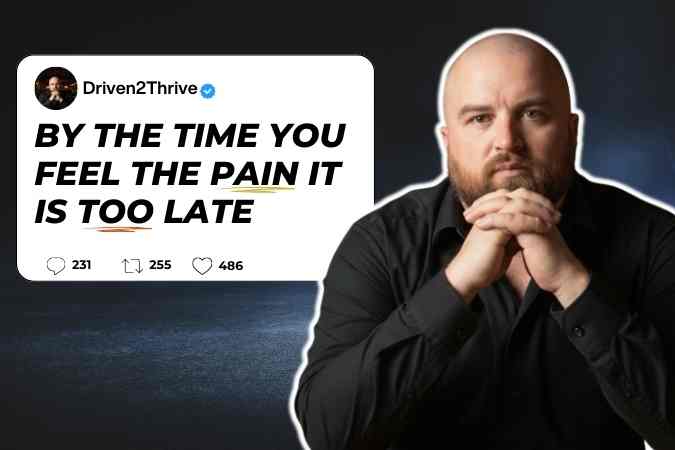
Pain Driven Change: Why Most Men Don’t Grow Until It Hurts
Pain Driven Change explains why most men wait until life becomes unbearable before they finally decide to grow — and how to reprogram that instinct before it damages their marriage, health, or sense of purpose.
From Our Sponsors
A Discount offer from Our Sponsors Mike Lindell and MyPillow for 30 – 80% off your entire purchase and FREE shipping over $75 using Promo Code “THRIVE”! Just use it anything you check out or you can also call call 800-794-5834

Recent Comments