
Mick Wienholt: Why 'Raise Adults, Not Children' Changes Everything About Fatherhood
Mick Wienholt – “We’re not trying to raise happy children. We’re trying to raise functional, happy adults.”
Ever wondered how the most devastating loss can become the foundation for the most meaningful life? In this profound episode, I sit down with Mick Wienholt, a father of four and podcast host who shares his extraordinary story about how losing his firstborn son changed everything – not just about fatherhood, but about faith, purpose, and what it truly means to raise children.
Mick opens up about the moment that redefined his entire existence: delivering his full-term son Luke, who had died in utero just a week before his due date. We explore how this unimaginable grief led him and his wife into a real relationship with God and completely transformed their approach to parenting the three children who followed.
The Philosophy That Changes Everything with Mick Wienholt
Discover why Mick believes the most important advice any father can receive comes down to just two words: “raise adults.” Learn how this simple concept shifted his entire parenting perspective from managing day-to-day challenges to preparing his children for a lifetime of success and resilience.
Mick Wienholt: Small Corrections, Big Results
Explore Mick’s approach to consistent, gentle corrections rather than waiting for major problems to develop. Understand why addressing small issues at the dinner table today prevents massive attitude problems at fourteen, and how this creates children that both you and the world will welcome.
Mick Wienholt: When God Interrupts Your Plans
Uncover Mick’s incredible story of leaving corporate life to pursue podcasting full-time after receiving crystal-clear direction during prayer. Learn about the three bullet points God gave him – “sit and wait, complete surrender, full trust” – and how obedience in the face of uncertainty can lead to purpose beyond your imagination.
The Reality of Parenting Frustration with Mick Wienholt
Learn why Mick believes fathers need to talk honestly about those moments when you can’t fix your crying baby and the frustration threatens to overwhelm you. Discover how admitting these struggles to your spouse or trusted friend protects both your sanity and your child’s safety.
Mick Wienholt: From Grief to Grace
Understand how Mick and his wife discovered they didn’t have a “Luke-shaped hole” in their hearts, but rather a God-shaped hole that only faith could fill. Explore how this realization changed not just their individual lives, but their marriage and the entire trajectory of their family tree.
Mick Wienholt: The World That Welcomes Your Children
Discover Jordan Peterson’s concept that resonated deeply with Mick: raising children who behave in ways that make the world welcome them. Learn how this perspective helps parents focus on building character traits that serve their children throughout life.
Whether you’re facing your own parenting challenges or questioning your faith journey, this conversation offers hope for fathers who want to create lasting impact. Mick’s story reminds us that sometimes our greatest pain becomes the pathway to our greatest purpose, and that raising children with eternal perspective changes everything about how we approach each day.
Remember, being a great dad isn’t about having all the answers – it’s about being willing to let God interrupt your plans and guide your steps. Are you ready to stop trying to raise happy children and start focusing on raising functional, happy adults who can change the world? Listen now and discover how one father’s journey through unimaginable loss became the foundation for extraordinary faith and purposeful parenting.
Connect with Mick Wienholt
Sponsors:
My Pillow
Free MyPillow Promo Code “TFM” for up to 80% off your entire order at MyPillow!
Get up to 80% off EVERYTHING at MyPillow with promo code “TFM”! We are proudly sponsored by MyPillow offers quality products at affordable prices. Use the code for savings on sheets, pillows, slippers, and more. Shop 250+ American-made items and support both the podcast and a great company. Enjoy the comfort and savings today! 🥳
www.mypillow.com/TFM
Support our podcast:
- Support us on Patreon – https://www.patreon.com/thefallibleman
- Buy us a Coffee! https://www.buymeacoffee.com/thefallibleman
Want to Share Your Message with the World?
Looking to be a guest on a podcast and reach a wider audience? Or maybe you host your own podcast and want to find amazing, high-quality guests—without the hassle?
If you answered yes, PodMatch is exactly what you need. Join Here: https://www.joinpodmatch.com/dhsp
Episode 33 of the Dad Hat Shenanigans Podcast: The Unfiltered Truth of Being a Dad
Time Stamps: Mick Wienholt | Two Words That Transform How You Parent Your Children Forever
- 00:00:00 – Mick Wienholt Introduction and Preview
00:05:50 – The Best Parenting Advice: Raise Adults, Not Happy Children
00:18:37 – The Unexpected Loss: When Perfect Pregnancy Ends in Tragedy
00:24:34 – From Luke-Shaped Hole to God-Shaped Hole: Discovering True Need
00:28:56 – Advice for New Dads: Prayer, Communication, and Realistic Expectations
00:42:05 – Final Parenting Wisdom: Small Corrections and Welcoming Children to the World
00:52:30 – Eternal Perspective: The Most Important Decision for Fathers
Want to be a guest on Dad Hat Shenanigans: The Unfiltered Truth of Being a Dad? Send D Brent Dowlen a message on PodMatch, here: https://www.podmatch.com/hostdetailpreview/dadhatshenaniganspodcast
DISCLAIMER: Links included in this description might be affiliate links. If you purchase a product or service with the links that I provide I may receive a small commission. There is no additional charge to you, and I appreciate your support!
Guest Disclaimer: The views and opinions expressed on this podcast are solely those of the guests. They do not necessarily reflect the views or opinions of the host, any organizations, companies, or institutions mentioned, or corporate entities represented by the host.
Our aim is to provide a platform for diverse perspectives and open dialogue. While we strive for accuracy and balance, it’s important to recognize that opinions may vary. We encourage critical thinking and further exploration of the topics discussed.
Listen to the Show
Transcript
Mick Wienholt: Two Words That Transform How You Parent Your Children Forever
Brent Dowlen: [00:00:00] Coming up on this episode of the Dad Hat Shena Ins podcast.
Mick Wienholt: the entrance, into Father Dom was with a full term six pound, eight ounce, 21 inch long dead baby. Now, why is that my favorite story? We’re not trying to raise happy children. We’re trying to raise functional, happy adults. Where did Napoleon keep his armies? Where? In his sleeves.
God gave me three bullet points. He said, sit and wait. Complete surrender, full trust. Raise your kids. Raise your grandkids and the idea there being for those that are kind of putting this one together, that’s like, Hey, you know, if we completely take our eye off the ball as parents, a lot of times our children end up [00:01:00] as overgrown children in adulthood and they can’t take care of their own kids.
Two words raise adults. And that changed a lot of how my wife and I parented because our whole point then became this kind of rallying around this idea of, I’m not trying to raise kids, I’m trying to raise an adult.
Brent Dowlen: Mick, every dad has that story. They just love to tell about being a dad. What is your favorite dad story?
Mick Wienholt: Yeah, Brent, thanks a bunch for having me on to be able to share this one. It may not exactly be like the most uplifting, but without question, it is my favorite dad story, and that is that back in January of 2012, our firstborn son, we were a week away from his due date and he died in utero.[00:02:00]
And the entrance, if you will, into Father Dom was with a full term six pound, eight ounce, 21 inch long dead baby. Now, why is that my favorite story? Very simply, man, it completely changed everything in our lives because it brought my wife and I into relationship with God. I knew about God before that, but I didn’t have any meaningful relationship with him and Luke dying and being delivered and all of the grief that went along with that.
It literally changed everything.
Brent Dowlen: Wow. That is, uh, not what most people expect with that question, and guys, we are going to dive deep on this one today. So strap in. We’ve got a lot of good conversation coming with Mick. I promise this one is gonna change some [00:03:00] perspective for you, so stick around. We’ll be right back.
With more from Mick.
Gentlemen, I sleep on my pillow. I sleep on my pillow Giza sheets, and when my MyPillow body pillows to hold my back in place, I have MyPillow towels. My wife even wears MyPillow slippers. I would never recommend a company I don’t personally use. We’re proud to have Mike Lindell and MyPillow as the sponsors of our show.
You can go to mypillow.com, use promo code tfm. Super complicated. That’s my parent company, the Fallible Man code TFM for up to 80%. Off your order and free shipping on orders over $75. For our listeners, you’re working with a great American company that is employee owned and you’re helping keep the show on the air so we can make more episodes just like this one.
Let’s get back to it.
Welcome to the Dad Hat Shenanigans podcast, the unfiltered truth about being a dad. [00:04:00] Real Dads real stories, unfiltered, candid conversations on fatherhood. I’m your host, Brent Dowlen, and today my guest is Mick Wienholt. Mick, I probably butchered your name. Welcome to the show.
Mick Wienholt: Yeah, thanks, man. In fact, you got it.
Perfect. So great job, Brent.
Brent Dowlen: Oh my goodness. Is a first guys, mark this one down. I usually blow that really badly, Mick. I’m, I’m looking your hat, when you look, I, there’s gotta be a story behind that. So what is your dad hat story?
Mick Wienholt: Yeah, so fortunately I’m blessed to be a father and when you look is the podcast that I host.
So we’re on YouTube and all of the other platforms when you look.com is our URL. But the backstory on all of that pretty quickly is that in 2019, I was basically. Given testimonies as something from God, and I had no idea what this really meant. And so it went through a number of different iterations.
And then at [00:05:00] the beginning of 2025, God made it really clear that he wanted me to launch when you look as a podcast. So I’ve been doing that full-time ever since, and it’s been a blast. Really, really neat to hear all of the miracle stories that people share on that particular show.
Brent Dowlen: Uh, for all of you, we’ll have links of course, down in the YouTube description or in the show notes.
That way you can check out Mic’s podcast. I’m definitely gonna go over and check out mixed podcast and I’m, I’m excited. Like I didn’t know, like I knew you were a podcaster. I honestly did not know what the show was about, so I’m actually looking forward to, ’cause I love an uplifting conversation. Like I, I absolutely love, uh, my daily Bible studies become very important to me.
I take time to read my Bible every day. It’s a new habit for me. Like I, I’ve been a believer for years, but actually getting into a habit of reading my Bible regularly. I, I was good at reading it when I wanted to, [00:06:00] like not really good at like making it a habit. Uh, and that has just become a upbeat part of my morning is spending some time praying and reading my Bible actually.
And so I’m always looking for. Those amazing stories where I can hear other Christians talk about what’s going on in their lives and what God’s doing. So definitely gonna have to go check out your show. I’m excited about that. So thank you right off the bat for that. ’cause I had no idea what your show is about.
Mick Wienholt: Yeah, yeah, absolutely. We’ll be diving that. Thanks for the opportunity to chat about it.
Brent Dowlen: Mick,
Mick Wienholt: how many kids do you have currently? So Brent, I’ve got four kids, three of which are living. So our would be oldest, he would be 13. And our oldest living child is our daughter. She is 12. And then five and a half years after she was born, God blessed us with identical twin boys.
So we got two boys that as of this [00:07:00] recording, are about six and a half.
Brent Dowlen: Oh my goodness. Twins, I cannot imagine.
Mick Wienholt: Game changer.
Yeah. It was,
uh, way, way, way more than we anticipated. It is not, as far as we’re concerned, it is not twice as hard. It is more than twice as hard with multiples.
Brent Dowlen: Yeah. Oh, wow. We, we may have to do a second show just, just on that.
- Everybody threatened, my wife and I, ’cause we both have twins in our families and so they’re like, you guys, you guys are due like this is gonna, and we didn’t have twins, but like everybody was like, yeah, you are gonna get twins. Like you’re just due for this and you, it runs in the family and it skips generation journalists, so you guys are like, no, no, no, just know God.
Please know. Please, please don’t do that to us. Uh, but yeah. Yeah, it
Mick Wienholt: was a, it, it was a, [00:08:00] a literally, man, it changed everything for us too. Um, it, it was such a brazy scenario and one where, because we had had a five and a half year old, we’re like, okay, we’re seasoned vets at this parent thing. You know, we certainly know how to change diapers, right.
We’re obviously beyond that stage, but we’re like, we’re we got this? And it legitimately crushed us. I mean, we were asking for help for practically strangers. Like, Hey, there’s a bottle over there,
there’s a baby over there. If you can put those two things together, we could really use your help to feed a kid.
So it was a lot of challenge,
but we made it through as most parents do one day at a time. One moment at a time. Right? And it’s just like,
Brent Dowlen: hey, if you have time to stand around, you have time to grab a bottle and help. Okay. That’s it. Oh, yeah. No, it’s, I love, we had ours about two and a half years apart. Um, but I, I’ve had some friends who their kids were like, like, [00:09:00] and you, mm-hmm.
You’ve got this mom and dad who are just exhausted with three little ones, or four little ones who are all under the age of three or four, and you’re like, uh, just, just do something useful help. Yeah, those are when you find out who your real friends are right there. That is exactly
Mick Wienholt: right.
Brent Dowlen: God makes it really clear very quickly.
It’s like, oh, okay. You are actually friends. Yeah. Mick, what was the best advice you were given about being a dad? Before you were a dad, what was your, the best advice somebody get? Because everybody has an opinion like ev the minute you find out you’re gonna be dad, like everybody’s got an opinion. But what was actually a, a piece of good advice you were given?
Mick Wienholt: Yeah, so I’ll start in with this by saying that, you know, my ego leading into being a parent basically responded to all of the cliches [00:10:00] that, you know, people talk about. Like, oh, they don’t stay young, long, or tiny long, and things like that, and you’re gonna wish that you spent more time with them. And all of these things that like were just these axioms that everybody would say, I thought that’s not gonna apply to me.
And again, it was ego that really drove all of that. Um, turns out all of those were true, but in terms of the advice, it actually wasn’t directly related to me being a parent. It was a piece of wonderful advice for parenting that I ended up absorbing through my brother’s father-in-law. And it’s two words, raise adults.
And that changed a lot of how my wife and I parented because our whole point then became this kind of rallying around this idea of, [00:11:00] I’m not trying to raise kids. I’m trying to raise an adult. So the decisions that we make, the way in which we would discipline or correct or poach or guide or give them a stretch opportunity has all been through this lens of, I’m gonna raise an adult.
Because another phrase that for me is not the number one, which I just said of raised adults, but it’s kind of like a close second. Is what I feel like could absolutely be on a bumper sticker and it’s Raise your kids or raise your grandkids. And the idea there being for those that are kind of putting this one together, that’s like, Hey, you know, if we completely take our eye off the ball as parents, a lot of times our children end up as overgrown children in adulthood and they can’t take care of their own kids.
And you as the grandparent a lot of times have to step in. And we’ve seen [00:12:00] that across our broader extended family. But without question, the number one was. Raise adults and it’s really helped to focus our energies and give us, uh, sort of a, a light at the end of the tunnel or a goal to really be shooting for in what sometimes feels like are some really challenging times as parents.
Brent Dowlen: Mick, how’d you, how’d you get into podcasting? You said God kind of pushed you in this direction with the podcast. Is this what you do full-time or?
Mick Wienholt: Yeah, so at the beginning of this year, I was in the midst of a transition from one employer to another. It was going to be to a much larger position. So this was ultimately a promotion.
I fully had a signed job offer that was accepted. I mean, you know, we’re talking about like significant formalities when you’re at the executive levels in organizations. And, um, within four days of all of that. [00:13:00] Being signed and, uh, notice given and all of that type of stuff, the entire thing completely blew up.
The job offer was rescinded and it was very clear to my wife and I that God was interrupting our plan. He shown us that pattern before. So while this was massively unexpected, it wasn’t. Completely a surprise. You know what I mean? Like, we, we, we knew who was the source of this blowing up, so we prayed about it a bunch and decided that, uh, it was time to leave the organization that I was planning on leaving anyway, even though the job offer had been rescinded and, um.
Let’s see, that was a Friday. So by the following Wednesday, Brent, God had communicated to me during prayer while I was fasting in a multi-day fast that I was to [00:14:00] stop looking for work and that I was to focus all of my energy on when you look, which is the podcast. Pretty wild. Wow.
Brent Dowlen: That’s a, that’s a leap, man.
I.
Mick Wienholt: Yeah, it was a little less about a leap, honestly, and, and a lot more about being obedient. And the reason I say that it was like, it was, it was crystal clear. God gave me three bullet points. He said, sit and wait. Complete surrender. Full trust and the sit and wait very much meant stop looking for work because I was immediately back in the looking for work game.
You know, I had a full, full list of 35 plus professional contacts that I had already been reaching out to another 15 or so to go in my list of 50, and he was crystal clear, stop looking for work, and then over the span of a number of weeks. Following that I [00:15:00] continued to ask him. Okay. Can I start looking for work now?
Like I did the sit and wait thing. I mean, I feel like I was kinda like put in the timeout chair in a way and I was like, okay, I, I’ve had my five minutes, right? Like, can I go back to looking for work? And so it continued for a, a number of weeks probably. Four-ish weeks of me asking him that to when he, um, very clearly told me again, this happened to be during a fast as well.
Um, I got some really straightforward language from the Holy Spirit where he said to me, shut your mouth and stop asking me about this in prayer. Sit and wait means sit and wait. And the fact that it was that clear literally started with shut your mouth and stop asking me about this in prayer. I was like, oh, okay.
Got it. Yes, Lord. Got it. Thank you [00:16:00] for being that clear. I’m sorry that I was kind of disrespectful with continuing to ask over and over and over again. I got it. Roger. Roger that. Good to go. So. That’s where my energy has been since beginning of the year. Oh my
Brent Dowlen: goodness. I’m, I’m getting goosebumps listening, man.
’cause, uh, praise. I had a very similar conversation with God when I started this show, so, wow. Uh, I got my, my company lost a contract and about two years into the show. It was like, oh, I don’t really have a job. And my wife and I were like, where do we go? We’re, we’re close enough to monetize this and, and, you know, make a go of this.
We’ve got some money put back. And that’s where God felt like it was like it. Oh yeah. Hmm. It it is one thing to say is like, yeah, yeah, I [00:17:00] trust God. And, and it’s another thing when God says, but do you really? Are are, are you really sure that you’re ready to be obedient because Yeah. It’s a so man, it can be
Mick Wienholt: very hard.
Brent Dowlen: Yeah. Yeah. And you know what? Congratulations on stepping out on faith. I mean that, ’cause that’s, that is a huge step. So many people are like, railroad meets the road and they’re like, ah. But maybe not God, you know? Uh, so I, I know that’s a scary leap, um, especially with kids. That says a lot to take on. So, you know, congratulations on, on that because that’s, that’s a giant movement, uh, that says a lot about where you are with your faith.
Much more so than a lot of people wanna. It, it’s nice to warm the pews when things are easy. Mm. [00:18:00] Right.
Mick Wienholt: Yeah. I’ve been that person too, for sure. You know, we’ve all been there. I’ve to God with, with all of that and everything that he’s moved me to do, you know, but it’s been a heart change over the 13 years that, that I’ve had an actual relationship with him.
Brent Dowlen: Mick, you, uh, you led the show off with some, some pretty hefty kinda lead in here. So let’s, let’s go there. We, we, we will, we’ll forego any more formalities and, uh, let, let’s get to the heart of this. What do you want to talk about?
Mick Wienholt: Yeah, I think it’s, um, I, I think it’s important for people to know that not all pregnancies are automatic, you know, meaning they don’t, they just don’t.
Uh, result in a living baby all the time. My sister had a stillbirth at 25 weeks, [00:19:00] um, years and years and years, like more than a decade before Luke. And so always in the back of our minds, we, we knew that like, you know, maybe with Luke, Luke being our son, um, you know. Maybe this would end that way, but you know, 99.99999% of the time, you’re fully expecting it because you’re having a healthy pregnancy, that you’re gonna have a healthy baby.
And, um, it was just a complete change of everything because what we. Had planned, which was to start a family at that point because we’d been married purposefully without kids for a number of years, and that was all part of our plan. Um, God interrupted that plan and he interrupted a life changing way because up to that point, I’m 31 years old when this [00:20:00] happens.
Okay? And up to that point, I knew about God. I grew up, quote unquote, in the church. I went to Christian based education from first grade to 12th grade, and I had no relationship with God on purpose. Like that’s what people need to hear me say, which is like it wasn’t unintentional that I didn’t have a relationship with God.
It was very much intentional. So. I know I’m kind of rambling here with a, with sort of those two points about the first one, it’s, it’s not always automatic, but the second one is, I, I think I’m, I’m trying to really drive home this point of the fact that, um, I firmly believe that God is in control and I recognize that all listeners may not, but, um.
The last obstetrician appointment that we had, and I went to some at the beginning, more or less, none in the middle. ’cause everything was kind of going really [00:21:00] well. And then towards the tail end and it being the first pregnancy, you know, usually the dads try and stay a little bit more involved. You know, for those guys that probably had like six or seven kids, they probably never go to any, um, you know what I mean?
Um, and I totally understand that. But the last OB appointment that we had, I remember asking. The doctor, what is it that we should be thinking about? You know, are we where, where are we at? And her response was, all is good. Your wife should be on the cover of Fit Pregnancy Magazine. And I remember that distinctly because without fully recognizing it at, at the time, at least not consciously, that totally stroked my ego.
Because that’s what I lived by at 31 years old. Terrible for sure. I’m, thank God I’m not that same human being. But, um, when she says, your wife should be on the cover of Fit Pregnancy [00:22:00] magazine, like that felt good. That literally that that one stuck. And then it was probably less than two weeks later that Luke’s dead.
Because I don’t know exactly how close that OB appointment was, but I mean, Luke died a week before his due, so for sure we would’ve been inside of that last, you know, 30 day window. And, um, it, uh, it changed everything for us. And then from there, Brent, it was an attempt to fill a Luke shaped hole. So we thought we had a Lukes shaped hole in our heart.
The second that we got the green light, um, to try and get pregnant again, we got pregnant again and miscarried. And at that point, my wife put the brakes on. She’s like, we need to actually heal from all of [00:23:00] this emotionally, because what I was trying to do was replace Luke. And in hindsight, I, I’m, I’m sort of, um.
I understand why that was my motivation, but man, I wish I wouldn’t have gone down that path. Um, mostly just because it’s like, you know, each child is. Amazing and wonderful and unique and creates an impact. You know, whether they miscarry at 13 weeks or they’re a full term stillbirth like I, our guy. Um, so I wish that I didn’t have to tell people I tried to replace Luke, but I definitely attempted to do that.
And again, God was like, no. You got pregnant, but it’s this one’s, this one’s not gonna happen. So, um, during all of that grief, [00:24:00] he took what we thought was a Luke shaped hole and showed us that, oh, man, that we had a gods shaped hole in our heart, dude. And he filled it that hole. That is, he loved us through all of the grief.
And then began to change our hearts and change our hearts into, into a position of where it was not about us, and way more about him. And that’s been a long journey. Um, everything changed on January 5th, uh, January 4th, I should say, of 2012. That was the day that we found out that Luke had died. He was delivered the following day after being induced.
So everything changed from January 4th. Um. And yet it’s also been a long process that the modern Christian Church refers to as sort of sanctification. But it’s been a, it’s been a gradual [00:25:00] change in addition to the complete and sort of instant change there on January 4th, 2012. And I’m just super grateful for that.
I would’ve never chosen that on my own, period, end of story. But, um, by God being so. Gracious in loving us through all of it, bringing us into relationship with him. It’s changed our trajectory as individuals, meaning my wife and I, it’s changed our trajectory, uh, in our marriage. And then it’s changed our family tree because our three children grow up in a household where God is real and God is present and God isn’t distant, you know?
Um. We are super, super grateful for that.
Brent Dowlen: Mick, let me, let me walk us back just a little bit here, because a lot of [00:26:00] dads, a lot of men, when they find out they’re gonna be a father, right? I mean, you’re there. There’s some panic. Uh, first there’s the immediate panic of this is really happening. Then there’s the, holy crap, am I ready to be a dad?
Followed immediately by the holy crap, how am I gonna pay for all this in, in that order? Um, I, I’m confident in saying that at this point in my life, uh, talking to dads all the time, right there, there’s those three levels. None of that has to do with what happens at this pregnancy doesn’t go well. Right?
That’s not even a thought that jumps into our mind. Um, my wife miscarried on our first pregnancy. And, and that was very difficult. Uh, more so even for her than for me. Right. Um, partially. ’cause I was out of state working at the time. I was still working in, in the trades and [00:27:00] I was out of state on a job. I was, I was, we lived in Washington, I was in Utah at the time.
Um, and I didn’t know she was pregnant. She was coming to visit me. Mm. And she was gonna surprise me and tell me that she was pregnant. Oh, wow. Uh, instead it was, it was a very difficult conversation. Right? Yeah. Because she then had to share that not only had she gotten, we had gotten pregnant, but then she miscarried, uh, I’d been gone for a while at that point.
I ended up being down there for almost four months. And so she had gone through that on her own with just some family stepping in. Right. But it was a. We knew it was a possibility. Uh, my mom had had a miscarriage. Her mom had had a couple miscarriages, right? But most men aren’t thinking about those things.
They’re certainly not thinking about going to full term, [00:28:00] right? This is, this is not something even flashes in our mind. We don’t, we don’t even know to be concerned that something like this could happen. The OB said that your wife was super healthy. Because I, I’m can hear men like calculating their brain, right?
Their brain is just going a mile a minute right now going, well, maybe she wasn’t taking care of. Right. They’re looking for a, a reason.
Show Bumper: Yeah.
Brent Dowlen: So for the dads out there who may have be, you know, just brand new dads or maybe looking at having a second child. What do you want to say to them with, with your experience and your story?
Because this is not something we think about. We don’t even think this is something we should jump into. What do you want to convey to them?
Mick Wienholt: Yeah. Um, I [00:29:00] pray for your living kids, and I pray for any future kids, and I pray for kids that are in. Your wife’s belly, man. That’s what I would be doing. Um, I think that, um, as I mentioned, you know, pregnancies are not automatic and neither is life.
Like when we went through the grieving process, we were in a, um, group grief, um, community. And so we learned from folks that had, you know, their 20-year-old died. 15 minutes from the house because she fell asleep at the wheel. She’d been driving home from college and we’re like, man, you’ve had 20 years with your daughter.
Your grief must be so much harder than ours, you know? Um, because we never got to see Luke’s eyes. Um, we never got to hear him cry. So it really put into perspective the [00:30:00] fact that life is precious. Um, pregnancies aren’t automatic, you know? And then for, for those that are, you know, those newer dads and they’re very much in the thick of things, um.
I would highly recommend that you talk and you talk to your wife, or you talk to your buddy and you talk honestly, because I’m not sure that a lot of guys want to admit that when their brand new baby is crying and they don’t know how to fix it, because what do we want to do as men? Almost always we wanna fix.
When we are legitimately perplexed and there’s nothing that we can do that is so infuriating a lot of times. And so that’s why people shake their babies and it’s awful. And my advice is just based on experience [00:31:00] that you gotta let those thoughts. Out into words, not out in actions. And even admitting that to my wife, not that I wanted to shake my baby, but that there was so much frustration that I couldn’t fix things, that I couldn’t make it better, that it seemed like for our daughter.
At this point, she’s the living kid. In this scenario, you know that my wife then had to fix things when it’s like, I’m a grown capable man and I can’t do this. You know? Talking those out with a buddy, talking those out with your spouse, I think is really, really helpful for people and their sanity, you know, and the health and safety of them and their kids.
Brent Dowlen: That was one of the scariest things as a father. Uh, was understanding that babies just sometimes cry and it’s not even necessarily that you did anything wrong. Right. And you go through the [00:32:00] checklist like, they’re fed, they’re clean, they’re, they’re cuddled. I, and you’re just losing your crap. ’cause what is going, there’s gotta be something wrong.
But I am not seeing, my wife had to just like. I’m, I’m the, I’m the baby in my family. My wife is the oldest of four and number four was a surprise late in life. My wife, uh, was 14 when he was born. Mm-hmm. He was five when we got married. I inherited younger siblings when we got married, but because of that, she had been around, she had helped raise Ben and that was one of the things that she had to convey to me is like, yeah.
Honey, sometimes babies just cry. It’s, it’s, it’s okay and it’s okay to not pick them up. It’s okay to need to take a minute and walk out on the back porch and breathe some fresh air and gain some perspective [00:33:00] because I was losing my mind to fix this. I got to, I, I got to, I got right and, and there’s no answer.
That was one of the hardest lessons to learn as a dad. It was, yeah, no, sometimes they just do that. It’s it. It doesn’t make you a bad parent.
Mick Wienholt: Yeah. I found it got easier with subsequent children, but man, that first learning curve is so steep. And I also think that part of what compounds all of it is mom has gone from sleeping very little.
Throughout the course of the pregnancy because she’s tired throughout it, and then bigger and bigger, so she just gets less and less sleep. Mm-hmm. Dad’s usually sleeping really soundly up until the night you’re in the hospital. And so you then go from, you know, whatever your normal sleep is, six hours, seven [00:34:00] hours, eight hours, whatever, to basically, oh, it feels like zero.
Um, and that screws things up understandably. So, you know, these, these are not excuses, it’s just the reality of it, you know? Whereas mom has been. Getting so much less sleep and so much more disrupted sleep that they’re way more ready to deal with some of those early things. Um, and, you know, being, being a parent is hard, especially that first parent scenario where, you know, there’s a legitimate learning curve and a hump that you are trying to get over.
And, and competence is one thing and experience is another. And then so you’ve experienced it no matter how many baby books you read, it is not the same.
Brent Dowlen: Can we, can we like just, we’re gonna just cut that entire soundbite out right there. There we go. That, that may be one of those valuable things I ever said on the show.
Right there is [00:35:00] on I, I looked up the number one time on parenting books written per year, and it’s like. Some obscenely high number of how many new parenting books get written every year, like just thousands upon thousands are written every single year. And it’s like, and they’re all wrong and they’re all right in some cases.
Right? That’s that. That was one of the most incredible things is like my wife and I both grew up in the church. We grew up helping out in the nursery. We grew up helping with the children’s program after we got married. I was a youth minister. Uh, we, we worked in children’s programs our whole lives. We helped with other people’s kids our whole lives.
We had a pretty good head on our shoulders. When I was a youth minister, I had two of my teens, uh. Stand up pregnant and they lived close to me. So I would actually go over during the day, [00:36:00] I’d, I’d work on my office hours in the morning and I’d go over in the afternoon and help the, the young man with his baby daughter while his wife was finishing her AA that she had already been on.
’cause she was in Running Start. Yeah. Right. So I would go help parent this child in their, so there was diaper changing and all that. Right. Nothing prepared me for when my oldest was born. Because I thought I had a pretty good handle on it. And then God went, yeah, get a load of this. This is gonna throw you for a loop.
Yeah. And you immediately start seeing things like all of your worst traits show up really quick in your baby.
Mick Wienholt: Yes. Yes. Or in your 4-year-old. Yeah. Mm-hmm. A hundred percent. Get that. Yeah. That’s not fun. Not fun. Not fun.
Brent Dowlen: Oh
Mick Wienholt: man.
Brent Dowlen: I had my oldest stare me down [00:37:00] after she started walking. We had the baby gates up and my wife was in the kitchen and she was in the living room with me and she wanted her mom, so she walked over, like tod over as they do when they’re barely walking and grabbed the baby gate and, and shook the baby gate.
I was like, no baby. Come here. She looked at me and she shook the baby gate. I was like, baby, no. I walked over. I was like, no. And she looked at me. I said, Abby, no. And her eyes narrowed and she looked at me. She grabbed that baby gate and just right. Shook the crap out of it. So I reached down, swatted her hand just slightly, you know, so, no.
Right? Mm-hmm. Oh man, the look of fury, and she just shook the crap out of the gate. So I reached down and, and swatted her a little behind. Just once. A little swat, right, [00:38:00] with a tear running down her cheek, defiantly her eyes narrowed. She put both hands on it and just shook the crap outta the gate.
And you could relate, right? And yeah, I scooped her up and I went well. There’s no question. You are my child. Okay. Mm-hmm. Right, because I, I’m that, that, that is so in my personality, my wife was watching the whole thing unfold at this point. She’s like, well, that solves any questions about that, doesn’t it?
Like, well, I don’t have any questions, honey, but Wow. Yeah. That’s definitely, she was so little at the time. I was just so overwhelmed. Just like, how, how can. How can some of those personality traits come out so little? Right. So, so early in it. You definitely see it as they get older, but I was just shocked, thought no.
Yeah, no, nothing I ever was taught, prepared me for that. Yeah, right. [00:39:00] Seeing that, that well said come out at you. Ooh, that is all me. You know, you now, as my kids are 11 and 13, I have, you know, moments my child will do something. My wife just looks, gives me that look of Uhhuh. This is all you.
Mick Wienholt: Yeah, I had a moment.
Uh, this is a couple of years ago. I think the boys were probably three or four, and I said to my wife, I was like, listen, if you have any question about what our son is thinking, literally just ask me. I told her, I was like, I know that might sound crazy because you’re the mom and moms are all knowing, but I’m like, that kid is a carbon copy of me right now, so I can tell you for sure what he’s thinking, what he’s motivated by, and it was just so crazy to see.
A three or 4-year-old version of myself [00:40:00] and to be in some ways just mesmerized by how, to your point, right? Like that flows from one generation to another and then to be like, man. Why did that part have to come through?
You know what I mean? Couldn’t that one have gotten filtered out in this process of like, making better kids, you know what I mean?
Oh yeah. But uh,
yeah, we, as Americans, I think we always want things to be up into the right and it just, it just doesn’t always go that way, you know? So, and then they need parents too, to help ’em with some of that stuff.
Brent Dowlen: I used to tease my wife. I, yeah, I married you. ’cause I was trying to balance me out. I knew we’d have kids, so I married someone as polar opposite on me in on some particular areas of my life as possible to try and balance out.
Mm-hmm. The world wasn’t ready for another me, so I couldn’t marry a woman who was just like me. [00:41:00] Oh, yep. Kids are hilarious.
Mick Wienholt: Relate to that.
Brent Dowlen: You, you, you just, you’re like, let ’em get the good parts. Let’s just, yeah. It’s, I think it’s that, that, uh, the idea of the crispr, the CRISPR technology, have you seen that?
Mm-hmm. Where they isolate genomes for animals and they can like alter genomes to try and give other animals similar traits and stuff like that. Wow. So, oh my goodness. They’re gonna wanna use that on people sooner or later. Absolutely edit out the bad stuff. They’re gonna be like, oh, that actually lies in this chromosome, so we’re just gonna take that out and we’re gonna be stupid and pry and play God.
’cause that’s what we do. And it ends spectacularly horribly usually, but you know. Yeah. Yeah. Well said. For the dads out there. What is the best [00:42:00] advice you would offer them today?
Mick Wienholt: Hmm. Well, I’m gonna go back to what I mentioned earlier, which is I think you should absolutely be raising adults. And I also think that, um, spending the energy necessary to do smaller corrections over time.
Is a lot more effective than not spending any energy and then waiting to correct a massive problem. So an easy example of this would be, you know, if your younger kids are mouthing off at the table, you just correct them there easily and gently instead of getting a 14-year-old that has a massive attitude problem.
And has never encountered any correction from their parents, [00:43:00] you know? Um, and for the parents that are listening, like some of you might think that that’s crazy, but I think when you stop and think, you probably know some families where it looks like the parents are chaperones, they’re not parents, and you know, it, it’s, in my opinion.
It’s really important to. Not hover over the kids. So that’s, that’s not what I’m implying with the small corrections. What I’m talking about is consistency. Um, and it’s, and especially earlier on, it’s exhausting. It’s absolutely exhausting. But what you end up with is, at least in our experience, you, you end up with kids that you appreciate.
Kids that the world is open to as well. Um, I heard Jordan Peterson talk about it at one point. Um, transparently, I’m not a [00:44:00] huge fan of his, nor a huge detractor of his. I kind of think I’m neutral on him ’cause I haven’t spent a lot of time with any of his content. Um, but I did come across something related to parenting where he was describing essentially.
Um, you, you’re trying to set your kid up so that they behave in a way that the world welcomes them, and that really just means that, you know, they’re. Productive and respectful of relationships of any and all sorts. You know what I mean? Um, and I think there’s a lot of validity to that. Like that phrase of where the world welcomes them was helpful to me.
I was already, um, my wife and I were already doing things that would lead to that, but I had never had that phraseology of where the world welcomes them and we’ve been able to help our kids. You know, see that, and in some cases, contrast that with some of the poor experiences that they’ve had with their friends.
I’m like, that [00:45:00] kid has treated you badly, consistently. Do you wanna spend time with and play with that kid? And they’re like, no. I’m like, right. And if we just let you do whatever you wanted, you could very easily end up where nobody wants to play with you. No one wants to be helpful to you. Because you’re just not something that people wanna be around.
So we’ve been trying try, try to make the small corrections before the anger and the hammer has to get brought out. It’s probably an easy way to summarize it.
Brent Dowlen: I think that’s something we don’t necessarily realize in the moment, right? When, when we’re raising our kids, when they’re doing little things. We’re afraid of being too hard on ’em when they’re, when they’re younger, we’re like, oh, well, it’s, it’s, it’s kind of cute. Or it is just a, you [00:46:00] know, it doesn’t happen very often or it’s a one-off.
Right. And you’re afraid to, I think most ads are afraid to be over the top, right? Mm-hmm. We we’re all familiar with the horror stories of, you know, we, we all had that friend. Even if we had a great dad, we all had that friend whose dad was just. We’ll say a piece of work that’s the friendliest way I can about it.
Right? Uh, we, we all had that friend who their, their dad fell in that category and you’re like, uh, or the one who, you know, the father was a raging drunk or something. Um mm-hmm. You know, I remember getting between my girlfriend and her dad when I was 16. The dude was a horrible drunk, horribly mean when he was drunk.
And I remember being a 16-year-old boy, jumping between him and his daughter, and he was [00:47:00] there. I, I’m a big guy. Like he was a big,
I I I got my high thoroughly on, I’ve been six foot since I was, uh, 12, maybe 13. Oh, wow. Like I’m, I’m a big guy. My dad was six five. Um. Yeah, there are not many men that intimidate me and like he was a big dude and I remember jumping between him and I was big enough that he actually like backed off and had to stop and, and give pause.
’cause it’s like, oh wait. Mm-hmm. Because his wife and his daughter were like tiny compared to him, but he actually was drunk enough but sober enough to go wait. This may not go the way I think it’s gonna go tonight, right? Mm-hmm. But we all had those relationships where we knew dad’s like that. And no matter how good of a dad you are, I think every dad is afraid [00:48:00] that if we make that one little correction or go a little, we’re we’re gonna become.
I think most of us who are healthy dads are trying to be a good dad, live in fear. Of tripping up and becoming I think so. We’re all scared of it, and so we we’re like, ah, it’s, it’s okay. It’s okay. Not thinking about what that kid’s gonna be like in 10 years. Right. We’re not worried about what they’re gonna be like when they’re a teenager, when they’re three.
Right. I, I think your first kid kind of helps you gain some perspective on that. Like, oh, well, you know, I didn’t become a complete piece of work because I swatted my kid when they needed it. But I think we all live in fear with that, of that early on. Like I, I, I had a great, but I was terrified of being a little, [00:49:00] little too much on the discipline.
Right. Early on. I don’t think I overdid it. I don’t think idid it, but I was, it was always in the back of my mind. It’s like. It, you, you think of it like a drug. It’s like, you know, if I do this one time, it’s like heroin. I’m afraid I’m just gonna, you know?
Mick Wienholt: Yeah,
yeah. Go off the deep end with it. I get it. You know, and, and that’s, I think a lot of times that’s.
Perhaps driven because we don’t want to be like our own fathers for a lot of guys. Um, or we don’t, to your point, want to be like that dad, you know, um, whoever we know. Um, and I think it’s also easy for us, and I’m really kind of speculating here to some degree, but I think it’s easy for us to remember the handful of super impacting moments in our lives.
And think that every time we do [00:50:00] something like a gentle correction to our kid is gonna end up as one of those super impactful moments. And I mean that typically more with the, with the negative connotation, you know, of where like, you have this memory from being a 7-year-old, you know what I mean? And your, your dad went nuts on you or went nuts on your mom or whatever, right?
Like it’s. It’s almost never gonna be that when you’re just like, Hey, you’re not supposed to talk to your mother like that. You know what I mean? Mm-hmm. Instead of just letting it go as an example. But, um, I think as mentioned, like we, we have these memories and to your point, we can be operating in a lot of fear of like, oh man, I don’t wanna reproduce that same outcome for my kids.
You know? Um, and, and then again, I don’t wanna sound like a broken record, but that’s what’s been helpful to my wife and I of where we go. Okay. But. But we are not trying to raise happy children. We’re trying to raise functional, happy [00:51:00] adults. And right now what that means is they were being disrespectful.
We need to address that particular issue. You know what I’m saying? Um, again, it just, it’s provided some really helpful perspective for us. Over the years and for us now, it’s been 12 years of raising kids. So certainly not outta the weeds yet, obviously the rest of their lifetimes to go, um, to varying degrees of how much you parent them as adults, right?
Mm-hmm. Um, but they’re always our children and so I’m by no means trying to suggest that I know how to parent a 16-year-old kid, haven’t been there. And it’s been a while since I’ve read the baby books, you know what I mean? And like we all said, they’re all, they’re, they’re right sometimes and wrong sometimes too.
But, um, you know, I think having some of those right markers and perspectives and goals and, and, um, visions in general for how we operate our family and those types of things can be really helpful to parents.
Brent Dowlen: Mick, [00:52:00] if our listeners want to connect with you. Obviously we’re gonna have the link for the podcast.
Podcast. Where’s the blessed place to connect with you?
Mick Wienholt: Yeah, when you look.com, because you can, um, email me right through that website.
Brent Dowlen: All right. We’ve covered a lot of ground free, free, Mike. If there’s anything you wanna leave them with that we haven’t covered, what is it?
Mick Wienholt: If you don’t have a personal relationship with Jesus Christ, now is the time to do that. Don’t gamble with eternity. Make a decision as an adult to accept Jesus Christ into your heart and then live your life for him and a life that honors God. And I can tell you from experience, it will not be easy, but you’ll spend the rest of eternity in heaven.
Not in [00:53:00] anguish. Do it for yourself. Do it for those around you, including your spouse and your kids, and you will be blessed.
Brent Dowlen: Guys, for myself Andm, thanks for joining us today on the Dad Hash Henas podcast, which is a community of dads navigating life’s challenges together. Until next time, laugh, learn, and live the dad life.
About Mick Wienholt
Mick Wienholt is the host of the “When You Look” podcast, sharing miracle stories and testimonies full-time after God clearly directed him to leave his executive career. As a father of four children (three living), he’s learned to parent through both profound loss and unexpected blessings, including identical twin boys who arrived five and a half years after their sister.
Mick Wienholt

Recommended Episode
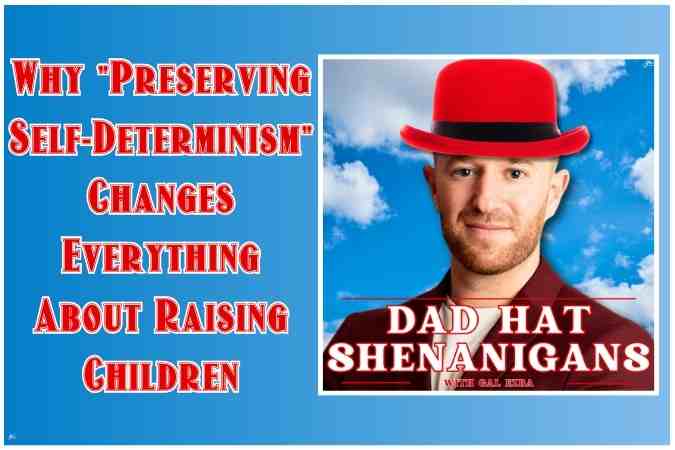
Gal Ezra: Why “Preserving Self-Determinism” Changes Everything About Raising Children
Ever wondered what it truly means to raise a child with respect while maintaining your authority as a father? In this thought-provoking episode, I sit down with Gal Ezra, a brand-new dad from Cape Town, South Africa, who shares his fresh perspective on fatherhood and the unconventional wisdom passed down from his father.
From Our Sponsors
A Discount offer from Our Sponsors Mike Lindell and MyPillow for 30 - 80% off your entire purchase and FREE shipping over $75 using Promo Code "THRIVE"! Just use it anything you check out or you can also call call 800-794-5834

Recent Comments