
Matthew Jandernoa: Why Understanding the Four Cardinal Virtues Changes Everything About Fatherhood
Matthew Jandernoa – “Pursue the good and treat life and family like school, where you recognize that you don’t know everything and that it’s about learning and it’s about enjoying the experience..”
Ever wondered how understanding virtue could completely transform your approach to fatherhood and marriage? In this thought-provoking episode, I sit down with Matthew Jandernoa, a Catholic life coach and father of two children under 2, who shares his powerful insights about raising kids through the lens of classical virtues and how this ancient wisdom applies to modern parenting challenges.
Matthew opens up about the incredible moment he delivered his firstborn daughter during a home birth – watching her do a literal somersault onto the bed at 3 AM and yelling “baby!” in complete shock. We explore his philosophy that parenting isn’t just about managing behavior, but about cultivating your child’s will so they can become fully functioning, flourishing human beings who can actually say yes to what’s good.
Matthew Jandernoa: The Four Cardinal Virtues That Change Everything
Discover why the four cardinal virtues – prudence, justice, temperance, and fortitude – aren’t just dusty old concepts, but actually correspond to the four fundamental aspects of human experience: your thoughts, your actions, your desires, and your fears. Learn how understanding these can revolutionize your approach to both parenting and marriage.
The Language Game That’s Controlling Your Thoughts
Explore Matthew’s insight about how our culture is engaged in a dangerous language game where redefining words like marriage, gender, and human life actually controls how we think. Understand why maintaining clear definitions matters for fathers who want to pass on truth to their children in a world that constantly shifts meanings.
From Rebel to Coach: Understanding the Four Tendencies
Uncover how Matthew discovered that everyone falls into one of four categories based on how they respond to expectations – upholders, questioners, obligers, and rebels. Learn how this revelation transformed his marriage with his obliger wife and how understanding your family’s tendencies can eliminate resentment and build stronger connections.
Matthew Jandernoa: The Real Purpose of Parenting
Learn why Matthew believes the goal of parenting isn’t just teaching right from wrong, but cultivating your child’s will – their intellectual appetite for what’s good. Discover how everything from sugar intake to screen time affects your child’s ability to sit still for prayer and make good choices throughout life.
Marriage as Covenant vs. Contract
Understand the crucial difference between viewing marriage as an exchange of goods and services versus a complete gift of self to another person. Explore why this perspective creates lasting marriages that can weather change and growth, and why divorcing marriage from parenting fundamentally misunderstands what marriage is meant to be.
Practical Virtue in Action with Matthew Jandernoa
Discover Matthew’s innovative approach to helping men overcome struggles with pornography by focusing on prudence rather than temperance. Learn about techniques like “distracting from the distraction” and why understanding your personal motivating structure is key to developing lasting habits and character.
The Champion Virtue Concept
Explore how each person has a “champion virtue” – the one that comes most naturally and motivates growth in all the others. Understand how identifying whether you’re naturally inclined toward prudence, justice, temperance, or fortitude can accelerate your personal development and parenting effectiveness.
Whether you’re struggling to connect with your spouse or looking for a deeper framework for raising children who can thrive in today’s chaotic world, this conversation offers timeless wisdom wrapped in practical application. Matthew’s approach reminds us that virtue isn’t about following arbitrary rules, but about becoming the kind of person who naturally chooses what leads to human flourishing.
Remember, being a great dad isn’t about having perfect behavior – it’s about pursuing the good while staying open to learning what that actually means in your unique family situation. Are you ready to stop treating parenting like behavior management and start cultivating the kind of character that will serve your children for a lifetime? Listen now and discover how ancient wisdom can provide the roadmap for modern fatherhood.
Connect with Matthew Jandernoa
Sponsors:
My Pillow
Free MyPillow Promo Code “TFM” for up to 80% off your entire order at MyPillow!
Get up to 80% off EVERYTHING at MyPillow with promo code “TFM”! We are proudly sponsored by MyPillow offers quality products at affordable prices. Use the code for savings on sheets, pillows, slippers, and more. Shop 250+ American-made items and support both the podcast and a great company. Enjoy the comfort and savings today! 🥳
www.mypillow.com/TFM
Support our podcast:
- Support us on Patreon – https://www.patreon.com/thefallibleman
- Buy us a Coffee! https://www.buymeacoffee.com/thefallibleman
Want to Share Your Message with the World?
Looking to be a guest on a podcast and reach a wider audience? Or maybe you host your own podcast and want to find amazing, high-quality guests—without the hassle?
If you answered yes, PodMatch is exactly what you need. Join Here: https://www.joinpodmatch.com/dhsp
Episode 37 of the Dad Hat Shenanigans Podcast: The Unfiltered Truth of Being a Dad
Time Stamps: Matthew Jandernoa | Why Your Kids Learn More From Who You Are Than What You Say
- 00:00:00 – Introduction and Language Games in Culture
00:04:36 – The MAGA Hat and Fighting for What Matters
00:07:19 – Catholic Life Coach and Family Background
00:11:08 – Favorite Things About Fatherhood
00:14:18 – Prayer Life and Study as Foundation
00:18:22 – Marriage as School and Leisure
00:25:31 – Biblical Headship and Decision Making
00:31:58 – The Four Cardinal Virtues Explained
00:39:56 – Four Tendencies and Personality Types
00:48:14 – Virtue-Based Coaching for Men’s Struggles
00:54:31 – Language Evolution and Modern Communication
01:02:15 – Connection Information and Final Thoughts
Want to be a guest on Dad Hat Shenanigans: The Unfiltered Truth of Being a Dad? Send D Brent Dowlen a message on PodMatch, here: https://www.podmatch.com/hostdetailpreview/dadhatshenaniganspodcast
DISCLAIMER: Links included in this description might be affiliate links. If you purchase a product or service with the links that I provide I may receive a small commission. There is no additional charge to you, and I appreciate your support!
Guest Disclaimer: The views and opinions expressed on this podcast are solely those of the guests. They do not necessarily reflect the views or opinions of the host, any organizations, companies, or institutions mentioned, or corporate entities represented by the host.
Our aim is to provide a platform for diverse perspectives and open dialogue. While we strive for accuracy and balance, it’s important to recognize that opinions may vary. We encourage critical thinking and further exploration of the topics discussed.
Listen to the Show
Transcript
Matthew Jandernoa: Why Your Kids Learn More From Who You Are Than What You Say
Brent Dowlen: [00:00:00] Coming up on this episode of The Dad Hat Shenanigans podcast.
Matthew Jandernoa: In our culture, one of the biggest problems is that there’s a language game going on. Yeah, right? Yeah. Well, I’ll redefine marriage and then now you can’t use the word marriage anymore to explain what you mean. Human life in and of itself, all of these things started out with a language game.
And then once they, when you know when someone wins the language game, now they control your thoughts because we think in a language before I could really understand what was going on. My child was, you know, did a somers cell onto the bed and I freaked out and said, baby, seeing somebody get shot and immediately respond with fight, um, that just did something to me and I realized that there’s a lot of things worth fighting for and I’m not doing a very good job at fighting for them.
But then there are very few people who are around to then help you with that. And I always found that to be funny, but also frustrating because. One, I don’t [00:01:00] like it when people say how, when they start out with saying how hard it is. Because if, if the context for marriage and parenting is, it’s really hard, why would anybody do it if your home isn’t set straight?
Mm-hmm. Don’t expect anything else to be set straight.
Brent Dowlen: Matt, every dad has that story that just they love to tell about.
Matthew Jandernoa: Mm-hmm.
Brent Dowlen: You know, it just lights ’em up when they share about being a dad. What is your dad story?
Matthew Jandernoa: So I can’t share this one very often, um, because that’s not always like, you know, makes sense to, to talk about, but I actually, my wife and I, we had two home births for both of our kids and for my first born, uh, I actually got to deliver her.
Uh, but it was a really crazy story. Uh, I won’t get too graphic obviously. And so it’s 3:00 AM Friday morning when she was born, it, I see the amniotic sac and I’m waiting for it to break because the fluid is really slippery. [00:02:00] Uh, but before, uh, that happens, uh, my wife pushes and my daughter. Pops out and does a somersault onto the bed, and I yell, baby.
And before I could make heads or tails ’cause the amniotic sack, I turned brown, but that was my daughter’s hair. And so before I could really understand what was going on, my child was, you know, did a somersault onto the bed and I freaked out and said, baby, and then the midwife and I, you know, grabbed the baby and everything was totally fine.
Uh, that’s not exactly how I expected to deliver my child though.
Brent Dowlen: Wow. So just, wow. I, I’m still lost on the home birth. That’s so unusual these days, but wow. Mm-hmm. We’ll, I’ll, I’ll ask about that a little bit later.
Matthew Jandernoa: Yep.
Brent Dowlen: But wow, what a way to enter the world.
Matthew Jandernoa: Yeah. It was 3:00 AM uh, about 24 hours of labor [00:03:00] and, uh.
Yeah, I was, you know, ready to catch, but she was, I guess, too fast for me.
Brent Dowlen: Gentlemen, I sleep on MyPillow. I sleep on MyPillow Giza sheets and with my MyPillow body pillows to hold my back in place. I have MyPillow towels. My wife even wears MyPillow slippers. I would never recommend a company I don’t personally use. We’re proud to have Mike Lindell and MyPillow as the sponsors of our show.
You can go to mypillow.com, use promo code TFM, super complicated. That’s my parent company, the Fallible Man Code TFM for up to 80% off your order, and free shipping on orders over $75. For our listeners, you’re working with a great American company that is employee owned and you’re helping keep the show on the air so we can make more episodes just like this one.
Let’s get back to it.
[00:04:00] Welcome to the Dad Hat Shenanigans podcast, the Unfiltered Truth about Being a Dad. Real Dads Real stories, unfiltered, candid conversations on fatherhood. I’m your host, Brent Dowlen, and today my guest is Matthew Jandernoa. Matthew, welcome to the dad Hat Shenanigans podcast.
Matthew Jandernoa: Thanks, Brent. Thanks for having me.
Brent Dowlen: Oh, man. So you, you led us off with an, an amazing story and I got so many questions about that, but we’ll, we’ll get there.
Now, as you know, this is the Dad Hat Shenanigans podcast and we all wear different hats as dads. So tell us about the hat you’re wearing today.
Matthew Jandernoa: Yeah, so I got this hat, it’s a Make America Great again hat, actually. And I got this hat, uh, pretty shortly after President Trump was shot. And that was a turning point for me, um, as a husband, as a father, because, you know, putting aside politics, I’m happy to talk about politics, but putting politics aside.
Seeing somebody [00:05:00] get shot and immediately respond with fight. Um, that just did something to me and I realized that there’s a lot of things worth fighting for and I’m not doing a very good job at fighting for them. And so that was a turning point for me, um, and really got me in incre. I was already convicted, but really convicted, um, that there is a battle going on in this country and in this world, and that we as fathers especially, and as husbands, need to step up and play our part.
Um, and that doesn’t always look flashy, right? You know, sometimes it’s just not snapping at your wife, but like, yeah, just having those principles and really pursuing something and fighting for a cause. Um, yeah, that’s kind of the story behind the hat. So I bought this hat like just right after that, pretty much.
Brent Dowlen: That was, that was a big day for anybody watching. Uh,
Matthew Jandernoa: yeah.
Brent Dowlen: It’s been a lot of years since someone took a shot at a sitting president on national television, so.
Matthew Jandernoa: Oh. And he wasn’t even sitting [00:06:00] because he was still running for president.
Brent Dowlen: Yeah. Yeah. But I mean, it’s, it’s been a while. I think the last most, I think someone took a shot at one of the bushes, but it wasn’t much
Matthew Jandernoa: I that much respect.
I know, uh, Bush Jr. He got a, a shoot, he had some stuff thrown at him at a press conference.
Brent Dowlen: I, I want, there was an attempt, but it was like a, there was, okay,
Matthew Jandernoa: I dunno.
Brent Dowlen: It, it was like, uh, someone tried to fly a plane into the White House or something, but then they landed on the lawn or something, but Right.
That’s not, that’s not an everyday moment. So regardless of how you feel about PO politics, I mean, that was a really big moment to realize. It’s like, wow.
Matthew Jandernoa: Yeah.
Brent Dowlen: There’s, there’s a lot of animosity going on right now, so, yeah. Mm-hmm. It’s, it’s a, it’s time for fathers to stand on what they believe on. Mm-hmm.
Uh. Regardless of where you stand on that, you know, because only us leading our families is gonna make the country better and the world better.
Matthew Jandernoa: Mm-hmm.
Brent Dowlen: So,
Matthew Jandernoa: yeah. And [00:07:00] I
Brent Dowlen: totally get
Matthew Jandernoa: it. And the, yeah, and the thing too is like, even Christ, he says, be hot or be cold. You know, I spit out the lukewarm, so it’s like mm-hmm.
You know, have your opinions be open to change, but have your opinions.
Brent Dowlen: Mm-hmm. So math, why don’t you break it down, we’ll get some context here. How many kids do you have? Who are you, what do you do?
Matthew Jandernoa: Sure. So I have two kids. Uh, they’re both under two actually. And I am a Catholic life coach. Uh, so I help people to grow in virtue and I help people to, to do that kind of in light of their humanity.
A lot of people, when they try to develop habits or grow and whatnot, um, it’s really easy to say, this is how you grow. And then try to apply to themselves as opposed to saying, okay, this is the goal. This is how I operate. How do I get there? Uh, you know, having a more personal approach. Uh, I’m coming from Pennsylvania, from Pittsburgh and yeah, we’ve been here for a little over a year now, so really enjoy the area.
We’re, don’t think we’re gonna stay, uh, you know, just ’cause we have family other [00:08:00] places, but really enjoy the area.
Brent Dowlen: Be careful about that. I, uh, I know I, I moved my whole life. I grew up, uh, my dad was domestic missionary and
Matthew Jandernoa: mm-hmm.
Brent Dowlen: So we moved every two to three years my entire life.
Matthew Jandernoa: Mm-hmm.
Brent Dowlen: Uh, like I was technically born in Oklahoma, but I only lived there for nine months ’cause my parents were on their way out at that point.
Sure. Um, and I lived my whole life that way up until I moved here. I moved here for work that was 18 years ago. Wow. So,
Matthew Jandernoa: yep.
Brent Dowlen: Right. You gotta, you gotta be really careful when you’re like, ah, I don’t really think I’m gonna stay.
Matthew Jandernoa: Yeah. Yeah, I know. Well, we keep, you know, we’ll go back and forth saying, well, we can move back to my family, move back to her family, and then we, you know, get so tired with talking between the two of those places.
We’re like, well, what if we just stayed here?
Brent Dowlen: Right. It’s a lot of work to move, man.
Matthew Jandernoa: Mm-hmm.
Brent Dowlen: People don’t always understand how much work is involved with [00:09:00] actually moving if they haven’t done a
Matthew Jandernoa: lot. Yeah. Yeah. And we have this, uh, this big bookshelf that I built, uh, for my wife. It’s like almost eight feet tall and like four and a half feet wide.
It’s like an oak bush. I hate moving that thing. It’s, I love looking at it and I love using it, and my wife loves it too. I get, it was a Christmas present, but absolutely hate moving the thing.
Brent Dowlen: Yeah, no, I can sympathize. I actually used to, uh, do freelancing. I, I was a youth minister, but the church paid me.
Matthew Jandernoa: Mm-hmm.
Brent Dowlen: I was technically part-time. Sure. Uh, was translated to, I got paid for 20 hours a week. I worked like six. Uh, because you, you can’t work with 20 teenagers in 20 hours a week. It doesn’t work. But we had a, a couple who owned a, uh, a self storage thing.
Matthew Jandernoa: Mm-hmm.
Brent Dowlen: And so I put a, he had me put a card on his desk, and I would help people either like load their storage stuff out or load into their storage stuff or move their stuff from their storage to the house that they had [00:10:00] bought.
Mm-hmm. Or they just placed it for a short time. And, uh, so on top of me moving, I, I moved a lot of people. Uh, I, I hired an 18-year-old kid who wasn’t quite as broken as I was to help me with some of the stuff. ’cause some of the furniture people end up with, you’re like, why didn’t you just burn that with the house when you left, man, just
Matthew Jandernoa: mm-hmm.
Brent Dowlen: I built in a bookshelf here for my wife, and I told her, I was like, no, it’s, it’s now part of the wall. It’s, I, I built it in place. It’s not built to go anywhere with us.
Matthew Jandernoa: Mm-hmm.
Brent Dowlen: Uh, she’s like, what? But I said, look, I built you a couch table. I’ve got one of those old tables behind their couch that keeps it off the wall.
Mm-hmm. I built fat, I built chi a coffee stand. Uh, we, our turtle enclosure, we have enough big furniture. It’s,
Matthew Jandernoa: yeah. And if you really need to, you’ll build something again.
Brent Dowlen: Right? Yeah, exactly. I can always buy more wood and do some work.
Matthew Jandernoa: Mm-hmm. Yeah. That’s not
Brent Dowlen: a hard [00:11:00] moving is not always worthwhile. Matt, what is your favorite thing about being a dad?
Matthew Jandernoa: Honestly, so, uh, I can’t, I dunno if I could really say my favorite ’cause there’s so many things. Um, but when I was thinking about it, it. It’s really, it’s like being able to interact with my kids more. Um, you know, as they get older and you can, you can kind of see them behind their eyes if, if you get what I mean.
Mm-hmm. Uh, and they can see you and there’s like an interaction. Absolutely. Love that. My, my daughter and I, um, you know, she can hardly pick up the pillow, but we have pillow fights and like, I get home from work and I come from, do you know, I come from upstairs to downstairs because I work from home, but, uh, you know, I’ll go on the couch and I’ll throw a pillow at her, you know, rough enough where it to knock her up a little bit, but not hard enough where it hurts her, obviously.
Mm-hmm. And she’ll fall back on the couch, she’ll laugh, and then she’ll pick it up with everything in her and just like, stumble over to [00:12:00] me and then fall on me with the pillow. And I just absolutely love that. Such a fun thing to, to, you know, come home to, so to speak. But yeah, just interacting with them.
Brent Dowlen: What was the best piece of advice you were given before you became a dad?
Matthew Jandernoa: So, it’s hard to say like, I have an answer, but the reason why I preface it with that is that a lot of people when I, you know, becoming married, becoming a dad, a lot of people you know, would say to me, oh, you’ll understand when, and that was a failing theme.
You’ll understand when you’re, you know, when you’re engaged or you’ll understand when you’re married, you’ll understand when you have kids, you’ll understand when you have two kids, you’ll understand when you have five. I’m just like, when I, I still don’t understand, you know, little things like, um, I don’t know, not being able to do certain things that you wanted to do, um, or whatever it might be.
Uh, yeah, just different piece of [00:13:00] advice. So I think the, the, the really, the biggest piece of advice that I was given, um, was ongoing advice from my dad. Uh, he instilled in me. The importance of a personal relationship with Christ and the value of study. And so I would, growing up, I’d wake up and see my dad praying every morning.
And sometimes it’d be really annoying because it was by the TV and I wanted to watch Saturday morning cartoons or whatever. Uh, but you know, that really instilled in me that if I wanted be the best father and the best husband, I need to have a good prayer life. And I need to, I need to be grounded in Christ.
Um, and also too, the value of study. So my dad loves books. He has so many books. Probably it’s, you know, it’s, uh, endearing quality about him, but also pet peeve of my mom, uh, that he has so many books, but books, yeah, just the value of study and yeah, kind of questioning and, and learning. Um, but yeah, no, that daily, like, dude, that daily prayer life, it, like, I notice when I, when I don’t pray in the morning, I [00:14:00] notice and it, and not in a bad way, but it blows my mind when people like don’t have a solid prayer life.
Not because I think they’re anything less, but I’m just like, dude, how do you like continue to develop as a person and grow and like be grounded? Um, yeah. I dunno. Christ is everything to me. So
Brent Dowlen: it’s amazing how many people get a, a slew of advice, right? You, you mm-hmm. Share. You’re gonna be a dad for the first time and like everybody has an opinion and the majority of advice that people give you is completely worthless.
Yeah. Because it’s either makes no sense and you’re just like on the nose of it, like, really that, that just doesn’t even crack. Mm-hmm. Or is things like that, it’s like, well, blah, blah, blah. But you’ll see when you get there. Yeah. That helps. Thanks man.
Matthew Jandernoa: Yay. Yeah. Well, and in a lot of pe like my wife and I’ll talk about this, so many people [00:15:00] are happy to tell you how hard marriage and parenting is.
But then there are very few people who are around to then help you with that. And I always found that to be funny, but also frustrating because one, I don’t like it when people say how, when they start out with saying how hard it is. Because if, if the context for marriage and parenting is, it’s really hard, why would anybody do it?
Right? Obviously, you know, there are challenges, but I find way more value when you say, oh my gosh, it’s the best decision I ever made. This is why. Um, and you know, there’s gonna be hard things and, you know, talk about it in the context of it being a good thing. Um, but so many people start out with saying it’s really hard.
And I’m like, how is that supposed to be helpful to me?
Brent Dowlen: How long have you guys been married?
Matthew Jandernoa: We’ve been married, uh, not, you know, not terribly long. So maybe, you know, maybe I, I don’t know yet because I’m [00:16:00] not there yet. But, uh. A couple. What? Shoot, 2023. Yeah, there you go. So just a couple of years. Yep.
Brent Dowlen: Hey, I’m, we are 24 and a half years in.
Matthew Jandernoa: Wow. Praise God.
Brent Dowlen: Still the best choice I ever made is my wife.
Matthew Jandernoa: Yeah.
Brent Dowlen: Uh,
Matthew Jandernoa: mm-hmm.
Brent Dowlen: I, I am grateful every day that God pulled us together and we work every day at it, but still, still the best choice. Yeah. Mm-hmm. There, there are hard days, but anybody who thinks that they can connect with somebody and like, share a life with somebody without
Matthew Jandernoa: mm-hmm.
Brent Dowlen: Any kind of work involved
Matthew Jandernoa: mm-hmm.
Brent Dowlen: Doesn’t understand any kind of relationship, but absolutely. Best choice, best decision of my life. Mm-hmm. I thank God every day for my wife ’cause mm-hmm. I couldn’t have made this work with anyone else. Like, it’s so. Yeah, sure. It’s hard. But there you go. 24 years in, I’m looking [00:17:00] forward to the next 24 years man.
Uh, we’re actually doing a marriage enrichment class at our church right now. Cool. ’cause we prioritize doing at least one a year
Matthew Jandernoa: mm-hmm.
Brent Dowlen: Just as a regular part of the maintenance on our marriage.
Matthew Jandernoa: Mm-hmm.
Brent Dowlen: Right. Uh, so
Matthew Jandernoa: do you find much like resources for married couples? Because some of that myself and a lot of people that I talk to, it’s like, there’s not tons of stuff for married couples.
I don’t know what your, what your experience is, but
Brent Dowlen: it really depends, um, from a, if you are a person who’s deep into their faith, right?
Matthew Jandernoa: Mm-hmm.
Brent Dowlen: A lot of churches will have more option mm-hmm. Than the secular world does. Uh. If you are coming at it from a purely secular base, which is always makes step more marriage, more difficult.
[00:18:00] There is, but it gets buried. Like it, it’s really hard to find good resources that aren’t faith-based. So it’s, I think it is a lot harder for non-faith based individuals
Matthew Jandernoa: Yeah.
Brent Dowlen: To find good resources. Um, I make a lot of relationship content on my other podcast.
Matthew Jandernoa: Mm-hmm.
Brent Dowlen: Because if, if things aren’t right there in that relationship
Matthew Jandernoa: Yeah.
Brent Dowlen: If your relationship with your spouse, if your relationship with your children at home, that those at home core relationships and your closest friends
Matthew Jandernoa: mm-hmm.
Brent Dowlen: All of life is much harder.
Matthew Jandernoa: Mm-hmm.
Brent Dowlen: Like everything is much harder.
Matthew Jandernoa: Everything. Well, yeah. So
Brent Dowlen: I try to focus there.
Matthew Jandernoa: Yeah. If your home, if your home isn’t set straight
Brent Dowlen: mm-hmm.
Matthew Jandernoa: Don’t expect anything else to be set straight.
Brent Dowlen: So I make a lot of content there for that because I, that’s where all my strengths jumps from. Like, as long as, as long as I’m tending Kate taking care of those things the rest of my life, I, I feel like I can go like, you know, slay giants. Uh, [00:19:00] I’ll tell you a great resource that shameless plug.
My, my dear friend, I’ve known him for years, Oliver Marcel, uh, runs the Relationship Trade Secrets podcast with his wife, um, Denise. They’ve been, they do marriage risk seminars. They travel, talking about marriage. This is what they’ve been, they started doing it as a blog years ago and have been doing it ever since.
Like, they’re one of my favorite resources. I go and listen to their podcasts and their YouTube channel.
Matthew Jandernoa: That’s cool.
Brent Dowlen: Um, because they are a faith-based couple, but that’s not the center part of the conversation because they know, they’re talking to a lot of people who don’t necessarily have a faith-based relationship hard and so always hard.
So they have just real honest conversations and really great material. Like I love to listen to their show. Mm-hmm. If I’m feeling like my wife and I aren’t clicking. I, I jump over their pod YouTube channel. So shameless plug relationship trade Secrets, you’ll find it under Denali, LLC. Uh,
Matthew Jandernoa: well, that’s, that’s why I think it’s so important to [00:20:00] treat like your marriage and your relationship with your kids as a level of like school and learning.
Mm-hmm. Because, and that’s one of the things too, is people like, I, I have a lot of opinions about marriage and family and parenting and stuff, and one of the things that would happen is I would express them and people would say, oh, you’ll understand when. Right. That’s kinda where that would come in. And
Brent Dowlen: Yeah.
Matthew Jandernoa: So, but the problem with that is that, oh, so a lot of the times when I talk, most of what I say are half bake thoughts. And so it’s, I, there’s something in my brain that I wanna get out, and then I say something, um, that’s a little bit more convicted, convicting sounding, or. Whatever it might be. But then people will take it as, oh, this guy is just hard set in his opinion, and it’s gonna be a hard day for him when that’s the one that doesn’t come to fruition.
Brent Dowlen: Mm-hmm.
Matthew Jandernoa: And so that’s kind of what I mean by school is like, you know, real school, if you think really, like classically speaking, education is a form of [00:21:00] leisure. And leisure is when you do something that you enjoy for its own sake. And so if you treat your relationships like school, like leisure, then you’re not trying to get anywhere per se.
But you’re saying, how can I enjoy this for its own sake and how can I be totally present in it? And so obviously I’m gonna bring my own opinions. If you don’t have any, then you’re not gonna be a very good husband or father because how the heck else do you make decisions if you don’t have opinions? But if you treat it like school and like leisure, then that means there’s a level of softness that you can, or willingness to, to change your opinion when something changes, you know?
Mm-hmm. Um. But yeah, I, I don’t know what your thoughts are, but I, I think that one, one thing that, um, a common struggle is when people make up their own opinion and then take that to their spouse, or take that to their parenting instead of having an opinion and then discussing or, or openly sharing with their spouse, if that makes any sense.[00:22:00]
Does that kinda make sense?
Brent Dowlen: Yeah, yeah. I know. I, I get it. And it is a growing thing, uh mm-hmm. With a couple, one of the, one of the, I think, big things that sinks a lot of relationships is people don’t allow for the fact that you are not the same person you are when you married her.
Matthew Jandernoa: Mm-hmm.
Brent Dowlen: Right. Uh, my wife and I are very different people than we were 24 years ago.
Matthew Jandernoa: Yeah.
Brent Dowlen: Obviously, I mean, there are some things that have endured, of course, but we go, people are like, oh, well, you know, they’re just a different person. Well, how long have you been together? 10 years. Yeah. I hope they’re a different person. And we don’t allow for that, right? We fall in love with an ideal
Matthew Jandernoa: mm-hmm.
Brent Dowlen: Instead of a person.
Matthew Jandernoa: Yeah.
Brent Dowlen: And so once you start to process and go, Hey, this is, it’s like a tree, right? It, it grows over time. And if I’m growing with it and nurturing with it, then we’re good. That’s healthy. That, [00:23:00] but that allows for growth. That allows for change, that allows for my opinion’s gonna change and I’m gonna have different ideas.
And to make that work, we have to do it together, right? Mm-hmm. A tree doesn’t, one, one route doesn’t grow this way very often, unless you live in Washington state and then happens all the time. But our trees grow around other dead trees all the time. Uh, so they get split, but you’re still connected, right?
It’s still, this has to work together. And so couples start to get this split and this person and this person are still in love with the person who started it with them. Mm-hmm.
Matthew Jandernoa: Mm-hmm.
Brent Dowlen: And you don’t realize like, no, we have to keep talking. We have to keep sharing ideas, we have to keep sharing vision. We have to keep sharing conversation every day.
Matthew Jandernoa: Mm-hmm.
Brent Dowlen: Or we, you know, I, I don’t hard my, like my wife, my wife respects me biblically and lets me have the final say on things. Mm-hmm. [00:24:00] Because she submits to the fact that, and people hate that word. At least women hate that word. Um, ’cause they don’t understand. It’s an act of love. She believes that I am doing the very best.
Mm-hmm. And will choose and put our pre relationship, our kids, our family as the priority with every decision.
Matthew Jandernoa: Mm-hmm.
Brent Dowlen: And so I always listen to what she has to say about things, but she’ll yield the final answer to me trusting that I’m going to lead us.
Matthew Jandernoa: Mm-hmm.
Brent Dowlen: I work hard. To earn that. I have not always been perfect, and I’ve gotten a lot of grace from her, but I work every day to have that belief in me.
Matthew Jandernoa: Mm-hmm.
Brent Dowlen: Um, but I want to, but I’m, on the other hand, I’m, I’m also very quick to ask like, Hey, what’s your opinion on this? Hey, what’s your thoughts on this? I wanna know, because she’s my partner and she sees things I don’t, and she thinks a different way than I do. And that’s amazing. And so, like, when it comes to raising the kids, [00:25:00] we didn’t agree on everything.
We haven’t agreed on everything. Right. We’ve definitely had our own opinions based on our lives. Yeah. Uh, and so there’s been a lot of give and take on that.
Matthew Jandernoa: Mm-hmm.
Brent Dowlen: It’s like, oh, I thought we were gonna, no. Oh, okay.
Matthew Jandernoa: Mm-hmm.
Brent Dowlen: Uh, maybe we should talk about this. ’cause
Matthew Jandernoa: Yeah.
Brent Dowlen: I totally saw this going a different way.
Uh, that that’s the only where the fights happen is when you stop listening to each other.
Matthew Jandernoa: Right. But, but even with that, I, if you think about it as like a business, uh, if there are two decision makers in the sense of two people who have the final say in a business mm-hmm. That business is never gonna go anywhere because, uh, just pragmatically, someone has to have the final say.
Brent Dowlen: Yeah.
Matthew Jandernoa: And it’s, and most, and most couples, because I actually do an, an engagement mentorship, so couples who are, you know, engaged to be married, like there’s a, I don’t think that the [00:26:00] church offers enough, uh, for engaged couples. And so I wanted to step in and help. But one of the things that I, I work with them is, uh, helping them to realize, okay, it’s the whole idea of headship in a final decision maker is specifically for the times when there’s a disagreement.
’cause if you agree, do you agree? So there’s no. You don’t need a final say person. Mm-hmm. It’s specifically for when you disagree. And so I think that most co a lot of couples go in with a little bit with rose colored glasses, uh, roast tinted glasses, and they go in and they say, oh yeah, you know, my husband has a final say.
But then if you look at how they handle discussions, oh, well, when we disagree, you know, the wife gets her way. And I’m not saying it’s wrong, obviously for, you know, the wife to ever get her way, obviously, because, you know, like you said, you have different purviews, you have different responsibilities in the relationship.
And so like [00:27:00] kids for example, and educating them and whatnot, I general, 95, 90 9% of the time I defer to my wife’s judgment because that’s just, if you think about it, a business that’s just smart business, right? You delegate things that you, uh, aren’t very good at or you, you know, don’t know enough about or you just want the time for, right?
So, but even that whole approach. Comes from viewing marriage as a covenant, right? Mm-hmm. As a, you know, a covenant is between two persons, right? And it’s gift of self to the other person, and it’s an exchange of persons in some way, whereas a contract is an exchange of goods and services. And so if you view marriage more like a contract, well then yeah, that would make total divorce makes total sense.
You know, because you’re agreeing to goods and services and because the person changes the way that they do things is going to change, or their opinions about things is gonna change. Mm-hmm. But if you have that agreement and that understanding of, no, I’m [00:28:00] receiving you whole, you know, completely and totally, and I’m giving of myself completely and totally, then that’s what actually creates for lasting marriages.
Because you fundamentally understand that you are going to change. And I want you to change because I love you and I wanna live life with you. And more than that, I, I understand that it’s a, you know, a promise to God. Um, also for the sake of the children, right? Like
Brent Dowlen: mm-hmm.
Matthew Jandernoa: Even, even if I ever wanted to leave my wife, I wouldn’t, at the very least, for the sake of my kids, at the very least, right.
Um, but you know, there’s so much more to it than that. But I, I think that we can often forget that kids is kind of an integral part of the marriage. You know, uh, the law had to be fruitful and multiply. And so if we, ironically, if we divorce marriage from parenting, um, then I think we don’t have a proper understanding of what marriage actually is meant to be.
I [00:29:00]
Brent Dowlen: don’t think you can separate marriage from parenting necessarily. I mean, I know, and, and there are people right now who are unhappy ’cause we’re saying this, it’s going to be part of it even if you’re divorced. Right. Uh, you know, I have friends, I have family who have ended up in divorces. Guess what?
They still have to interact with their ex-wife or mm-hmm. And you know, it, it still has toll on the kids. It still impacts the kids. And so you can, you can say it doesn’t, but it, it does. Right. It’s all, yeah. That, that marriage relationship, whether it ends or stays, is going to have an impact
Matthew Jandernoa: mm-hmm.
Brent Dowlen: On your children, on the way your children live in the future.
On the way children, uh, I did a con, had a conversation on my other show with a guy who specifically works with adult children of divorce.
Matthew Jandernoa: Hmm.
Brent Dowlen: Uh, they work with, you know, people a, he works with people after their adults [00:30:00] to look at, you know, how their parents divorce affected them.
Matthew Jandernoa: Mm-hmm.
Brent Dowlen: Now, as an adult, how is it affecting their relationships now?
How is it impacting the way they look at relationships or they experience relationships and, uh, even, even gray divorces where the. Kids were already adults and then their parents got divorced afterwards. Right? Yeah. Uh, so you can’t separate Right. It, it doesn’t work.
Matthew Jandernoa: Mm-hmm.
Brent Dowlen: My daughters are learning what to expect from a man with the way I treat their mother.
Matthew Jandernoa: Absolutely.
Brent Dowlen: It’s just a fact. They’re learning what to expect from a man, by the way, I live my life. And so I take that as a personal challenge to, you know mm-hmm. Try to become Superman.
Matthew Jandernoa: Mm-hmm.
Brent Dowlen: Not always hitting that one, but, uh, it’s what drives me every day. It’s like, okay, I have to set the bar so my daughters never bring home a bonehead.
Matthew Jandernoa: Yeah. Right, right.
Brent Dowlen: If dad can do all [00:31:00] this, or if dad is this way, that like, it raises the bar on the chances of who they’re going to bring home to introduce to me.
Matthew Jandernoa: Mm-hmm. Yeah. Well, and I, and I think that really, you know, ties in with the idea of virtue. Uh, so. Quick context. I used to have a, you know, a sour taste in my mouth when I heard the word virtue.
Uh, and the reason for that is because I, I misunderstood it as, you know, like there are four cardinal virtues, for example. And I thought that people just picked them for no other, for no reason, or just said, Hey, you know, we should have something to guide us. Let’s pick forward, you know, kind of arbitrary.
Brent Dowlen: Mm-hmm.
Matthew Jandernoa: Um, but really what virtue is, is the habitual disposition to do the good. Meaning. It’s a heart posture towards the good. And so it’s not behavior, although behavior is a result of it, you know? And so, so here’s a, here’s a quick question. So there are four cardinal virtues. Do you know why there are four cardinal virtues?
Brent Dowlen: No.
Matthew Jandernoa: Okay. Most people don’t. I [00:32:00] didn’t know this until I learned it, but, so the four cardinal virtues are prudence, justice, temperance, and fortitude. Okay. So if you think back to, so the, the virtues in this way, the four cardinal virtues were first introduced with Plato’s, uh, the Republic, and then really, uh, do, you know, explained a lot more by Aristotle and then more people in the Catholic world, St.
Thomas Aquinas really, you know, Christianized it. Uh, but either way, the reason is because if you were to divide the human experience into four categories, it would be your thoughts, your desires, your fears, and your actions slash interactions. Okay? How do we think, well, prudence, how do we desire well temperance, how do we manage our fears?
Well, fortitude, how do we act and interact? Well, justice. So when I learned that, I was like, oh, this isn’t like some [00:33:00] sophisticated, you know, behavior set, but rather it’s no, how do I flourish as a human being? Because if you were to say, Hey, uh, would you want to have well ordered thinking that promotes your flourishing and brings about the good, everybody would say, oh yeah, absolutely.
Right? But then if you start saying prudence or these other names of virtues, like temperance, a lot of people have a sour taste in their mouth or don’t really know what they are. Um, and think it’s just about a certain behavior set when in reality the only behavior focused one is justice. And that’s because if you don’t act, interact with other people, you’re not gonna have a flourishing life.
And, you know, how does that play into parenting and marriage? Well, uh, I’ve actually, I’ve discovered recently there’s this thing called the four tendencies. I dunno if you’ve heard of it before.
Brent Dowlen: Hmm.
Matthew Jandernoa: Okay. So Gretchen Rubin, she, um, I dunno what she, where her day job is, but she has, she’s an author of number of books and she, [00:34:00] long story short, um.
Interacting with some people found that some people are very self-motivated and other people are not. And she was asking the question, why is that? And so she did a lot of research. I wanna say it was like a million people, but if it wasn’t, it was tens, hundreds of thousands of people. A lot of people. And what she found is that everyone kind of went into four categories, and it was based on how we respond to expectations.
So, uh, there’s external expectations and internal expectations. So you have the upholder who readily responds to internal expectations and external expectations. Kind of a very balanced person in that way. Uh, self-motivated, but happy to do things for the people that they ask ’em to do it. Uh, then there’s the questioner who, you know, uh, readily responds to internal expectations, but questions all external expectations.
So if it makes sense to them, they’ll do it. But if it doesn’t, then it takes a lot of willpower to get themselves to do it if they do it at all. And there’s the obliger. Who is very other motivated. So they’re not [00:35:00] self-motivated. They, you know, can’t really follow through on their own expectations for themselves.
But if somebody else has an expectation for them, it’s very easy for them to do it. So you think about if you were on a track team in high school and you were running all the time, super easy for you. Then you get outta high school and you’re like, why can’t I run? I wanna run, but no one is expecting me to run so I don’t run.
Right? So that’s kind of an obliger. And then there’s the rebel who rebels against all expectations, does not like being told what to do, um, really values kind of freedom and doing what we want. Uh, so I actually would find myself in the rebel category. And what’s really cool is that as I, I’m studying the four tendencies and I’m studying the four cardinal virtues, what I found is that they actually overlap and that each, uh, tendency is fertile ground for a particular virtue.
So the upholder fertile ground for the virtue of temperance, because temperance is being, as you know, balanced desire. Upholders are generally balanced people. They don’t really get sucked into things very [00:36:00] much. So they’re fertile ground for the virtue of temperance, questioners, you know, they question things.
They wanna know things. So they’re fertile ground for the virtue of prudence, which is about seeing reality as it is practical wisdom, you know, that kind of thing. The obliger, uh, is fertile ground for the virtue of justice because justice is quite literally a framework of, of external expectations about how you act and what’s right and what’s wrong and all that kind of stuff.
And it’s other, other focused. And then the rebel is fertile ground for the virtue of fortitude. Uh, you know, because whenever you rebel you’re fighting something and whenever you’re practicing courage, you’re fighting against something and you know you’re standing up for something. So when I realized this, this totally changed my coaching because if you wanna develop a habit.
You need to figure out what actually motivates you. You know, are you motivated by things that make sense and reason? Are you motivated by being a balanced person? Are you motivated by helping [00:37:00] other people and you know, making sure that other people are happier, other people are okay? Or are you motivated more so by, uh, you know, a cause, you know, freedom, you know, the rebel, for example.
And so when I’ve realized that, and I incorporated it into my coaching, it was the coolest thing because, uh, you know, when I’m coaching an upholder, they, it doesn’t take tons of desire to get them to do something because they can readily do things that they wanna do. But what that means though is that they haven’t dug deep to know what their biggest desires in life are.
And so I asked him, I was like, dude, have you ever asked yourself like, what do you want in life? What do you want most in life? And he’s like, no. Like I’ve never needed to, things come pretty easily to me, whereas. Uh, you know, for him. So it’s like, okay, you need to go talk to your family and your friends.
Ask them what they see in you, what they see you becoming and experiment, you know, try things out, you know, but the rebel, uh, because there’s a [00:38:00] huge disparity between what happens and what they want. ’cause they can’t get themselves to do it. Um, and for me, right, there’s a huge awareness of what I want in life because I don’t get it very often because I’m always striving or struggling for it.
So when I coach a rebel, it’s very much about, okay, it’s not, it’s not, you know, it’s about becoming a certain kind of person and less about achieving a certain goal. Because once it becomes a goal, it can become an expectation and then we don’t wanna do it anymore. But rather if it’s about becoming a certain kind of person or fighting for a particular cause, that’s very motivating.
So, you know, I’m kind of rambling a little bit. When, when it translates to parenting and marriage, if you, so my wife is an obliger and I’m a rebel. So one of her. Biggest frustrations is that I never seem to be able, not never, it’s a strong word, but it’s hard for me to just do the thing that’s asked of me to just do it right.
So she always gets frustrated like, why can’t you just do the thing? Whereas for me, uh, it, you know, [00:39:00] a frustration for me is that she very much relies on me expecting her to do things, whereas I hate expectations. And so when we realized this as a couple, that was a game changer because it’s so easy to build up resentment in marriage when you don’t understand your spouse and how they function, how they are motivated by things.
So for her, it’s like, you know, again, we love each other very much. That’s the context. Um, but thoughts can cross her mind of like, wow, he’s just lazy, or he’s just not motivated, or he’s selfish. Whereas for me it’s like, geez, like why can’t she just do the thing that she wants to do? Like, why does she always have to?
You know, be so communal about it and not just be an individual who wants some, who wants their own things. Um, so when we recognize that we can actually fight against that resentment and actually develop in relationship and grow in each other, grow with each other, and love each other even more.
Brent Dowlen: [00:40:00] I think, uh, part of the translation on that is we don’t have some of that in modern language.
Matthew Jandernoa: Mm-hmm.
Brent Dowlen: And as modern language changes, it becomes, people automatically resist, I hate to say old words, right. Uh, prudence is, is not something you’ll hear in common society. Right. You’re not gonna hear those, those words that they use, that we use for the virtues.
And so there’s immediate turnoff in the, I think I may be in one of the last generations that actually heard those words in like. Normal use still.
Matthew Jandernoa: Mm-hmm.
Brent Dowlen: Uh, you know, you hear justice, but that’s about it.
Matthew Jandernoa: Yeah.
Brent Dowlen: Right. So, but
Matthew Jandernoa: that would make sense because that’s how we interact with each other, and That’s
Brent Dowlen: right.
Matthew Jandernoa: Never, not an,
Brent Dowlen: never not an
Matthew Jandernoa: issue.
Brent Dowlen: You, you hear it taken outta context a lot too. Right. You don’t hear [00:41:00] prudence are fortitude. Some of those, we, we’ve used words to describe those virtues.
Matthew Jandernoa: Mm-hmm.
Brent Dowlen: But we don’t actually have a more modern context for that word a lot of times. Mm-hmm. People will try and say, you know, grit or something like that for fortitude.
Uh, and so I think when you talk about those things, people auto, they’re start automatically disconnect.
Matthew Jandernoa: Mm-hmm.
Brent Dowlen: Because you get from the millennials down going, that’s one of those old words. Like, boomers use that word or, you know, uh. My, my parents are boomers, so I, I laugh about that. Same, same. But you don’t hear those modern words.
And then, so we have a complete disconnect from how those impact our relationships, impact us as fathers, impact us as husbands. Uh, because it’s just like, uh, why are you using some old dusty word no one talks about? Right. And [00:42:00] then actually getting people to understand, I, I love like personality assessments and stuff like that.
Mm-hmm. Because they can tell you so much about people. And so I, I’ve read part of the study, you’ve talk, you talked about mm-hmm. Not I, I haven’t gone in depth on it, but I, I’m constantly looking for, uh, data points and information and insights on people. And so I, I’m familiar with some of her work. I didn’t know who did it, but I am familiar a little bit of it.
Um, but my wife and I grew up in a time when like you were doing, there were more personality tests going on. Mm-hmm. Different people doing it. Uh, so I always saw the value in finding those personality points because it helped, like my wife and I connect. Mm-hmm. Uh, we, we understood each other earlier on in our relationship because we had both done some of the same personality Yeah.
Assessments in the [00:43:00] churches and stuff. Um, it’s like, oh, you’re one of those, aren’t you? Okay, now I totally get it.
Matthew Jandernoa: Mm-hmm.
Brent Dowlen: Uh, I think it would help a lot of relationships. I look at my children, like my brain filters people that way. Yeah. I look at my children based on personality assessments that I’m comfortable with, that I’ve used and I’m more, more familiar with and go, oh, she’s a.
She, she’s an otter. Got it.
Matthew Jandernoa: Mm-hmm.
Brent Dowlen: Yeah. She’s, she’s a golden retriever. Okay. I got that right. We’re sorting them out. Um, I don’t know what it was like, there was a string in the nineties where personality assessments, they used a lot of animals.
Matthew Jandernoa: Sure.
Brent Dowlen: My wife’s an al, I’m a lion. Like it’s
Matthew Jandernoa: love it.
Brent Dowlen: Uh, I, I don’t know why that was the thing then in, in the mid nineties, but that was the habit with at least some of them.
Um, and so I look at that, right? I also filter people through love languages, [00:44:00] right? Mm-hmm. That’s one of the first that filters I use when I meet somebody as I’m like, okay, what is this person’s love language? How do they understand this? ’cause it helps me communicate with ’em better.
Matthew Jandernoa: Mm-hmm.
Brent Dowlen: Uh, so there’s a lot of value in applying those things, I think, as a father.
Matthew Jandernoa: Mm-hmm.
Brent Dowlen: Right. And if you guys aren’t familiar with what he’s talking about, this is one of several personality. Exams out there, that is possible that you can actually start to filter people through. Mm-hmm. But it will help you with your marriage relationship. It will help you understand your children.
It’s really funny when you have kids and you start to see it because you’re like, if you know you and you know your spouse, and you go,
mm-hmm.
Brent Dowlen: How did that happen? Right?
Matthew Jandernoa: Yeah.
Brent Dowlen: Like multiplying negative numbers, you know, certain things shouldn’t happen. Like, wait,
Matthew Jandernoa: yeah,
Brent Dowlen: this plus this does not equal this. How did that happen?
Right?
Matthew Jandernoa: Mm-hmm.
Brent Dowlen: And that’s when you really start to pick up. It’s [00:45:00] like, oh, my kid has their own very unique personality. They inherited some of it, but they have their own unique personality coming out. Mm-hmm. So you use the virtues in your counseling to help filter and help other people understand alongside this.
Yeah.
Matthew Jandernoa: Yeah. Well, and, and I think it really, it ties nicely with what is the, the goal of. Parenting in particular, but I think it’s extrapolated to a lot of other things. You know, what is the purpose of the human life? What is the purpose of development? What is the purpose of marriage? All this kind of stuff on a human level.
Um, it actually answers, you know, ’cause a lot of people, gen, especially younger generations, really want an answer to that question. Like, what actually is the purpose of parenting? What actually is the purpose of a lot of things? And again, to go back to, to Aristotle and to philosophy, uh, we all have two types of appetites.
Okay? So your sense appetite, which is [00:46:00] what you’re motivated to do and drawn to based on your senses, right? So, uh, something smells good, something smells bad, uh, something tastes, you know, all that kind of stuff. And then the other appetite is your intellectual appetite, what you’re motivated to do and drawn to based on what, uh, you reason to be good.
And so. That actually is called the will. So when most people think about the will, they think of willpower. You know, I’ve gotta, you know, grit just will, will my way through it. When in reality it’s actually an appetite that, um, you know, when you choose to do something, you do it because you think it’s good, right?
And so the goal, the purpose of parenting is to cultivate your child’s will. So we know a lot, and particularly in Christian circles, we understand that as, okay, I need to educate them in the faith. I need to tell them what’s right, what’s wrong, and what’s good in that way. What it also includes though, is your sense appetite actually can affect your intellectual appetite, right?
So your [00:47:00] senses can affect your will. So for example, in extreme cases, addicts, right? Um, if you’re addicted to something, your perception of reality is warped. And so what you think is good is different probably in some cases than what is actually good. And so this is when it also, you know, brings in like.
Candy and junk food and screens and all this other stuff because here’s a, as a Christian parent, if you want, if you think prayer is important, uh, and you want your kid to pray, but they’re always hopped up on sugar, they’re always watching tv, they’re on your phone, whatever it is, right? How do you expect them to sit still for 15 minutes, let alone want do that?
And so that is like, you know, the goal or the purpose of parenting is to cultivate their will so they can be a fully functioning, flourishing human being that can actually say yes to the good. You know, not only do they know what’s good, but also have the capability to say yes to that. [00:48:00] And I think that young people especially want to know what is the purpose of, of parenting.
Um, and you asked me a different question and I kind of forgot what that question was. I was gonna tie it back in. Uh, what was, what was the question you asked me again?
Brent Dowlen: Are you using virtues in
Matthew Jandernoa: your
Brent Dowlen: counseling? So
Matthew Jandernoa: that’s the goal, right? Is, uh, particularly my coaching as well. Okay. How can I step into that parenting, so to speak, and help them to see the good and be capable of pursuing the good.
So, because we don’t have a good understanding of the virtues, uh, a great example is I’ll, I’ll coach a number of guys who struggle with, you know, pornography and masturbation. They all think mo more often than not, that I, they need to grow in temperance, right? There’s this desire and I need to stamp it out, I need to rein it in, that kind of stuff.
But what I actually find that a lot of my clients need to grow in the virtue of prudence because if prudence is how to think, if we think, well, most of the time, uh, you know, the guys [00:49:00] don’t have like a, a, a desire for it in the sense that they want it in their life. You know, they’re coming to me ’cause they don’t want it in their life.
But really they struggle with handling the thought or the temptation when it comes into their, into their brain. So that’s actually prudent. So, uh, one of the subverts of prudence we work on is alertness. Being fully aware of the situation again, what guy, you know, what man doesn’t wanna be fully aware of the situation, you know, being prepared or, you know, being aware of all the intricacies and whatnot.
And so a way that we do that is when you have that temptation or an intrusive thought, it can cause you to be anxious. And when you’re anxious, you have tunnel vision. And so you’re only looking right here, you’re not able to be fully aware of the situation. So, uh, it’s tool, I call it, distracting from the distraction, where the idea is that tempting thought comes and instead of being, you know, pushed into this one direction of thinking, you say, Hey, wait a minute, what else is about that thing?
So an example that I use is, there’s a beautiful woman in a red dress [00:50:00] that pops into your mind. You can either be alert to the woman or you can be alert to the red dress. Very different trains of thoughts. You know, uh, you know, we know the train of thought with a woman, but red dress, oh, what else is red?
Apples are red. Hmm. Apples taste good. They’re pretty sweet jo ranchers. And then you just distract yourself from the distraction. So the idea is to keep those thoughts going. And so many of the guys, they’re like, one guy in particularly was like, dude, this is the, this is the first thing that’s ever actually been helpful before.
And I think that’s because virtue in reality is very personal, because each person grows in virtue a little bit differently because each person has a different motivat motivating structure. Each person cares about things a little bit differently. And so if I can help them to understand what they care about, what motivates them, then that means I can help them to grow in virtue, in light of that, as opposed to just saying, no, you just gotta do X, Y, and Z.
You just gotta, you know, do the [00:51:00] thing. Um, so I, I kind of like to call it as well, like your champion virtue, the virtue that you’re. That it comes more naturally to you. Um, the one that if you wanna grow in that one, that motivates you to grow in the other virtues. Um, yeah. And take a more human personal approach.
And I think that’s something that’s also lacking in our culture, but also in the church. Uh, I don’t think that we take a very, a personal enough approach to growing a virtue and holiness.
Brent Dowlen: I think you need to start work on, uh, renaming the virtues.
Matthew Jandernoa: Yeah.
Brent Dowlen: Just, just a personal opinion. I think you need to work on a, as you continue in, in, uh, helping men with this, I think you need to work on renaming the virtues into a, uh,
hold on.
Sorry. I just got an alert on the system. It looked like [00:52:00] it stopped the recording. Oh. That was scary for a minute.
Matthew Jandernoa: I was like,
Brent Dowlen: wait, no. Uh, where was I? Yeah. So yeah, Rena
Matthew Jandernoa: versus, yeah.
Brent Dowlen: I, I think that would, uh, benefit you as you’re working with more and more men, especially as it transitions. Right. ’cause prudence is not a word we understand at this point.
Matthew Jandernoa: Mm-hmm.
Brent Dowlen: And unless you were raised reading the King James. Right. Prudence is not a, a word that gets used in common society. And the more we separate ourself from certain language, the harder it is for us to hold onto that.
Matthew Jandernoa: Mm-hmm.
Brent Dowlen: So there’s gotta be a modern equipment or something that will just, just a personal thought.
Matthew Jandernoa: Yeah. Uh, yeah. Well, and I think too, um, I think it’s important for that, and that’s even why modern authors are important. Mm-hmm. Not because frankly, not because we haven’t written about most things.
Brent Dowlen: Yeah.
Matthew Jandernoa: Already. But again, like you said, uh, some words fall on deaf ears, you [00:53:00] know, modern ears. Our terminology very different, especially with technology and the internet.
Uh, the progression of the English language took a hard left, you know? Yeah. With all the slang and the texting lingo and all that kind of stuff. Um, so I, I completely agree with, I think it’s important, and that’s even something that I’ve thought about as like, okay, what are some terms that are more like, you know, low key, like new agey, uh, edgy things that are like, whoa, I haven’t heard that one before.
Um, or Whoa, that sounds really cool. Um, but then I think it’s actually, it needs to be an avenue back.
Brent Dowlen: Mm-hmm.
Matthew Jandernoa: To the length, to the, to, to that, that kind of language, because I think that’s, in our culture, one of the biggest problems is that there’s a language game going on. Yeah. Right. Yeah. Well, I’ll redefine marriage.
And then now you can’t use the word marriage anymore to explain what you mean. Now you have to use this other term, uh, or gender or all, you know, all of these things, right? [00:54:00] Human life in and of itself, all of these things started out with a language game. And then once they, when, you know, when someone wins the language game, now they control your thoughts because we think in a language.
Mm-hmm. So if we start thinking if certain words mean different things that affects our thoughts and our thoughts affect our desires and our behaviors. So I I, I, I agree with you, but I think it’s also necessary to, to use that, to bring them back to, to what, you know, to what prudence actually is. Because I think that if, does that make sense?
Brent Dowlen: Well, see, I I don’t want you to like change the word
Matthew Jandernoa: Yeah.
Brent Dowlen: And the meaning. ’cause I, I agree a hundred percent. It pisses me off to no end. I got into semantical argument with a guest one time because he, he is trying to argue is like, well, you know. I had an experience with God. It doesn’t mean that I believe in God.
It’s like you, you can’t have an experience with something you don’t believe in, like you can’t
Matthew Jandernoa: or that, or that something that doesn’t exist.
Brent Dowlen: Right? Yeah. You, you [00:55:00] cannot say in one breath, I had an experience with a higher power, and then tell me in the same breath that I don’t believe in a higher power.
Do you understand? This doesn’t work? Like,
Matthew Jandernoa: yeah.
Brent Dowlen: Well that’s the way you define this. No, no, no. There’s the definition. You do understand. He had never actually seen a dictionary, which blew my mind. Uh, I felt seriously really, really old in that conversation. I was like, you got a really poor education dude.
Like there is a dictionary that actually defines these things. Uh, that’s the way language works. If we can’t all agree on a word and what it means mm-hmm. We can’t actually communicate. Yeah. No, I don’t want to get rid of it entirely. Yeah. Okay. But you almost need like an entry level word. Something that means the same thing that is a little more modern that you can use at the entry level into that conversation.
And as they open up more to it, then you can use the full words.
Matthew Jandernoa: Yeah.
Brent Dowlen: Uh,
Matthew Jandernoa: no, that’s a good idea. That makes a lot of sense. And I think, like, frankly, even just from a [00:56:00] business marketing level, you know?
Brent Dowlen: Yeah.
Matthew Jandernoa: Uh, if I, you know, for temperance, for example, if I say how to become a more balanced person
Brent Dowlen: mm-hmm.
Matthew Jandernoa: That is gonna draw a lot more eyes than how to become a more temperate person. Because again, when you hear the word temperate, you think, oh, how do I desire less? How do I reign it in? When in reality it’s about how do I desire? Well, and what’s really cool is that one of the, the sub virtues of temperance, it’s called the EU pia, it’s a Greek word and it’s leisure.
Most people wouldn’t put temperance and leisure in the same category. But it is because if you think about work and play, what is the easiest way to temper your desire for work, to increase your desire, for play, for leisure? What’s the best way to temper your desire for leisure? To work, you know? Um, and so that’s the thing with temperance, it’s, it’s about becoming a balanced person where your, your desires are pulling you evenly.
Brent Dowlen: Mm-hmm.
Matthew Jandernoa: And you’re not being dragged one way or the other. But I, I, no, that [00:57:00] makes total sense. I think balance even would be, would be a good word for temperance,
Brent Dowlen: right? Just, just, just something at an entry level. Uh,
Matthew Jandernoa: yeah.
Brent Dowlen: When I, when I used to, uh, work with teenagers, I was a youth minister. Uh, I had, I had the translations of the Bible that I go, yes.
Mm-hmm. You know, I, I reviewed how these were translated. I like these, I’m okay with these.
Matthew Jandernoa: Mm-hmm.
Brent Dowlen: I feel like, you know, they’re pretty close. But I had the version of the Bible I used for a kid who was coming from the outside who had never been to church in this age range or this age range based on where their education be should be.
Mm-hmm. Right. But also, I’ve never been exposed to church lingo. Then I had the Bibles I used with my kids who were born, bred, and raised in the church.
Matthew Jandernoa: Yeah,
Brent Dowlen: right. The, to get rid of certain terminology just for that. Right. I didn’t want the meaning to change, but you know, if I sit here and tell dad’s like, you need more temperance [00:58:00] and prudence in your life.
There, there are fathers listening right now who are, you know, below the age of 30 going, I’m sorry, what? What is,
Matthew Jandernoa: yeah.
Brent Dowlen: I don’t even, I’ve never even heard those words.
Matthew Jandernoa: Mm-hmm.
Brent Dowlen: Temperance has something to do with temperature. Right. We just, unfortunately the English language has lost some amazing words over the years.
Mm-hmm.
Matthew Jandernoa: Mm-hmm.
Brent Dowlen: Uh, and I, I think that will help as you talk to more and more men. Yeah. Right. If you can give a more modern word to bring them in.
Matthew Jandernoa: Yeah.
Brent Dowlen: And then you can expose them to the bigger concept. Yeah. ’cause you’re not gonna find a modern equivalent that has the same breath.
Matthew Jandernoa: Mm-hmm.
Brent Dowlen: That temperance would Right.
Balance kinda get, but it doesn’t really get,
Matthew Jandernoa: yeah.
Brent Dowlen: Right. Yeah, exactly. So it’s an, it’s a gateway word. There we go.
Matthew Jandernoa: It’s a gateway word. I love that. [00:59:00] That’s hilarious. Well, and the other thing too is, um, like why words are so important in understanding, and this is again, why, like, back to that, you know, that lesson that my dad taught me of how prayer is incredibly important and study is incredibly important.
Because if I’m not learning, you know, and, and you know, if you don’t like reading, there’s audio books. That being said, I think you should try to figure out a way to like reading ’cause it’s just so important. Um, but words, right? So if you think about love, for example. What the heck is love, right? If you think about it in a secular context, you know, there’s a lot of ways to think about it in a Christian context.
It’s usually associated with self-sacrifice, you know, and different stuff like that. Another def, particularly in the Catholic church, a definition that’s kind of, if there is a definition, ’cause you know, love is beyond comprehension in some ways, but it’s willing, the good of the other. And the problem that I have with that in a modern context is, again, when you hear the word will, [01:00:00] most people think willpower, right?
Mm-hmm. And so then when you think about love is willing, the good of the other, or doing what’s best for them, really easy to develop a martyr complex where it’s like, okay, well if it hurts, that means it’s love. It’s like, well wait a minute. There’s a lot of things that hurt, that aren’t love. And beyond that, it’s, you know, love is a choice.
Okay? I agree with that. But to say that it’s merely a choice loses so much of it. And so that’s why I think it’s, if you think about Will as in what you’re motivated to and drawn to based on reason, oh, that means that it’s actually receptive in some way. Because if you think about how to satisfy any appetite, it’s receptive.
If you’re hungry, you receive food. Right? If you are blind, you receive vi, you receive sight. It is like, it’s a re, all of your senses are receptive. And that is so important when it comes to love is that it’s, it’s actually first and [01:01:00] foremost total reception of the other. Right? And then as a response to that, you see how good they are.
And then that motivates you to give of self to the other person. So if you don’t see the goodness of the person first and foremost, well then you’re not gonna wanna give of yourself. Mm-hmm. So for guys that are struggling to sacrifice and whatnot, maybe it’s because you’re not totally, uh, you know. We’ll say in love with your spouse, maybe actually you need to get to know your spouse more.
Maybe you need to receive them better, you know, and understand who they are more. And that’s even why I said earlier, it’s like, know yourself and know your spouse, because if you can do that, how, like you can’t not love them because each person has, you know, is infinite worth and dignity. So if you really get to know the person, you know, especially someone that you married, you know, uh, you can’t help but love them.
And when you, when that happens, then that’s when you wanna give of [01:02:00] yourself to that person.
Brent Dowlen: Matt, we gotta start wrapping this up If we’ve peaked someone’s interest, right? If, if guys are listening, they want to go deeper on this, where’s the best place to connect with you?
Matthew Jandernoa: Yeah. Um, you, so steadfast life.net is my website.
Um, literally put that in the browser. First thing you’ll see a, like a, a free call, discovery call button or whatever. Um, that’s right to my calendar so you can grab a spot. It’s also my email on the bottom of the website, but, uh, that’s super cool. Uh, great way. I’m on LinkedIn too. Um, I, I’ve been really political lately, but you know, it’s whatever.
Um, yeah, that’s probably the best way you can email me if you don’t wanna, if you’re asked questions, or you can also just grab a slot on my calendar. Uh, in the near future, I’m gonna be putting more content out there on my website about the virtues, about, you know, relationships and all that kind of stuff.
So stay tuned for that too. [01:03:00]
Brent Dowlen: Matt, we’ve covered a lot of grounds today. If our listeners heard nothing else, what do you want ’em to take away from this?
Matthew Jandernoa: Uh huh That’s a fat question. Um, I would say don’t, Hmm. I would say pursue the good and. Street life and family like school where you recognize that you don’t know everything, and that it’s about learning and it’s about enjoying the experience, if you will.
Um, so pursue the good and be open to, to what the good actually is and not just what you think. It’s
Brent Dowlen: guys for myself and Matt, thanks for joining us today on the Dad Hat Shenanigans podcast. A community of dads just navigating life’s challenges together. Until next time, laugh, learn, and live the dad [01:04:00] life.
About Matthew Jandernoa
Matthew Jandernoa is a Catholic life coach who specializes in helping people grow in virtue through a personalized approach that considers their unique motivating structure. As a father of two children under 2, he brings both ancient wisdom and modern psychology to help families flourish. You can connect with him at steadfastlife.net.
Matthew Jandernoa

Recommended Episode
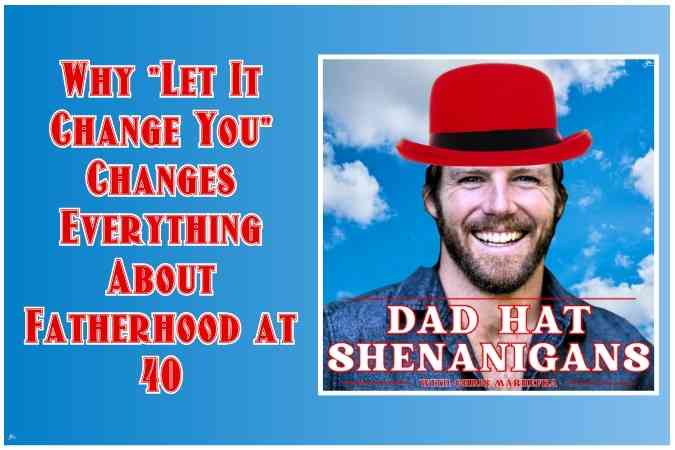
Chris Marhefka: Why “Let It Change You” Changes Everything About Fatherhood at 40
Ever wondered why everyone feels compelled to share horror stories the moment you announce you’re becoming a father? In this refreshing episode, I sit down with Chris Marhefka, a 40-year-old entrepreneur and father of a two-year-old daughter, who challenges the cultural narrative that fatherhood is nothing but sleepless nights and endless struggles.
From Our Sponsors
A Discount offer from Our Sponsors Mike Lindell and MyPillow for 30 - 80% off your entire purchase and FREE shipping over $75 using Promo Code "THRIVE"! Just use it anything you check out or you can also call call 800-794-5834

Recent Comments